

Here’s a truth nobody tells you when you start a supplement brand: you’ll spend months perfecting your formula, and then the label, that tiny piece of film wrapped around your bottle, will make or break whether anyone trusts what’s inside.
It sounds unfair. It kind of is. But that’s the reality of shelves and search pages crowded with competitors who all claim to be “clean,” “potent,” and “third-party tested.”
So let’s talk about how to actually pick a good supplement label printing partner, without getting lost in jargon or sales pitches.
Compliance first. Pretty later.
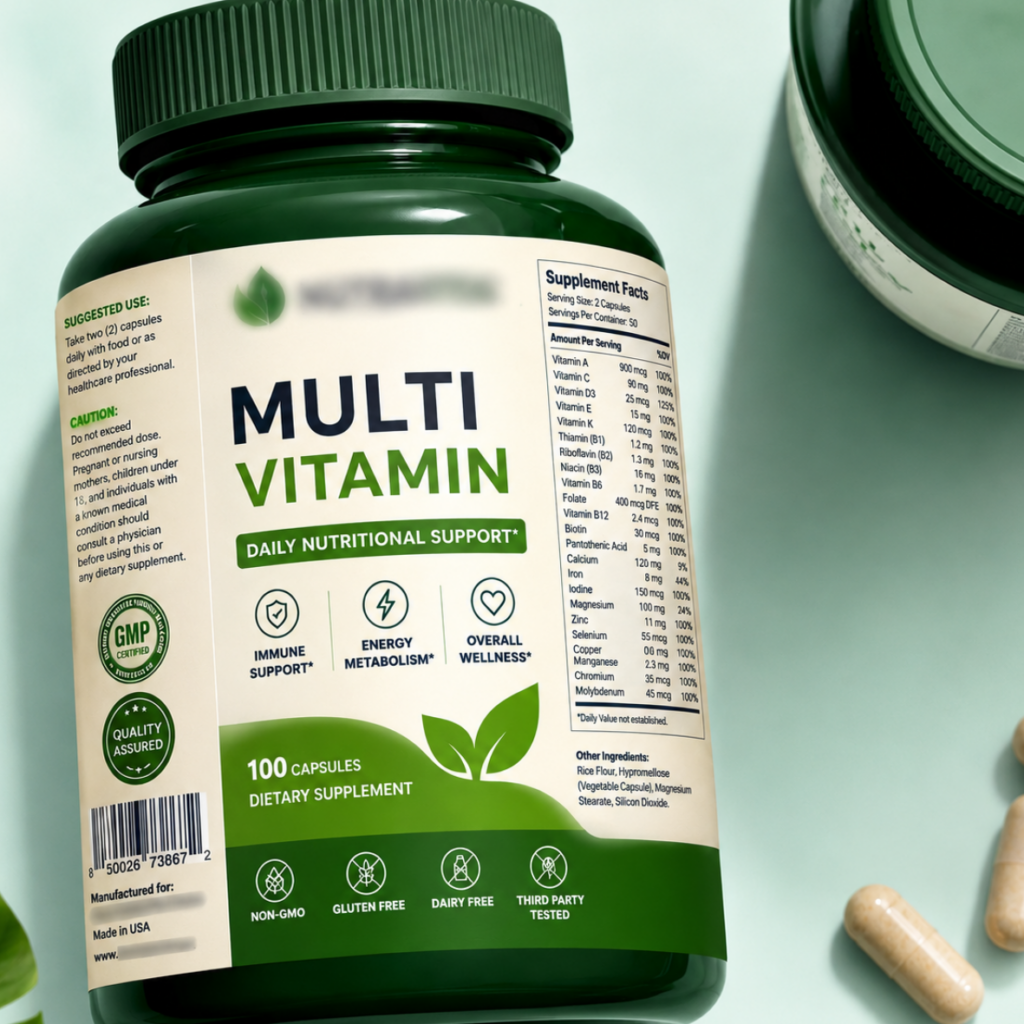
I know, I know, you want to talk fonts and colors. Everyone does. But at The Pure Nutra Labs, we learned early on that supplement labels aren’t just branding; they’re legal documents. The FDA has specific rules about how your Supplement Facts panel needs to look, what allergen info has to appear, where your net weight goes, and what claims you’re even allowed to make. Get this wrong, and you’re not looking at a design revision; you’re looking at a recall, or at minimum, a very awkward conversation with a regulator.
Before you even think about aesthetics, ask whoever you’re working with:
- Have they actually done supplement labels before, or just labels in general?
- Can they build a compliant Supplement Facts panel themselves, or will you need to hire someone else for that part?
- Do they keep up with labeling rule changes, or are they working off what they learned five years ago?
If they hesitate on any of these, that’s your answer. Move on.
Design and printing are two different jobs
This trips people up constantly. Supplement label design — the creative side — is about layout, typography, color, and making your brand feel like something worth trusting. It’s a mix of art and regulation.
Supplement label printing is a completely different beast. It’s about substrates, inks, adhesives, and whether your label survives a humid warehouse or a sweaty gym bag without peeling. It’s manufacturing, plain and simple.
A lot of small design studios only do the first half. They’ll hand you a beautiful file and wish you luck finding a printer. Which means now you’re managing two vendors, two timelines, and probably two rounds of “wait, that’s not what I approved.” A company that does both — design through print, under one roof — tends to save you a lot of back-and-forth. And a lot of gray hair.
Ask what materials actually make sense for your product
Not every supplement needs the same label, and honestly, a lot of brands don’t think about this until something goes wrong.
- Bottles, pouches, and blister packs all need different adhesives.
- If your product has any oil or moisture involved, your label needs to resist that — or it’ll bubble and peel within weeks.
- Shrink sleeves look incredible, wrapping all the way around the container, but they cost more and need different equipment than a standard pressure-sensitive label.
- Matte versus gloss versus foil isn’t just a look. It signals price point. A beauty or nootropic brand going for “premium” needs to think about this early, not after the first print run.
A good printer walks you through these choices. A mediocre one just prints whatever you send them and lets you find out the hard way.
Minimum orders matter more than people expect
If you’re just starting out, you probably don’t need 50,000 labels. You need a few hundred to test the market without draining your savings. Bigger brands need the opposite — consistent quality at scale, without the price jumping around every time they reorder.
So ask directly: What’s the minimum order? Does pricing improve meaningfully as volume goes up? And if you sell out unexpectedly, how fast can they turn around a reorder? Some companies are built for giants and will barely glance at a small first-time order. Others are great for startups but can’t keep up once you’re moving real volume. Know which one you’re talking to.
Formulation and labeling under one roof helps more than you’d think
This is where full-service manufacturers tend to pull ahead of standalone print shops. When the same team that develops your formula also handles your supplement label design, there’s a lot less risk of your label saying one thing and your bottle containing another. It also means when you tweak a formula — swap an ingredient, adjust a dose — the label update happens fast, instead of getting stuck in an email chain between three companies.
If your manufacturer and your label printer are two separate businesses, just make sure someone owns the job of keeping both sides accurate. Because nobody wants to explain a mislabeled ingredient list to the FDA.
Don’t skip the turnaround conversation
A finished, tested, ready-to-ship product sitting in a warehouse because the labels aren’t done yet is one of the most frustrating (and common) launch delays out there. Before you sign anything, ask how long design proofs take, how revisions work — unlimited rounds, or do they cap it at two? — and whether you’ll see a digital proof before they run a full print job. That last one matters. Catching a typo on a screen costs nothing. Catching it on 10,000 printed labels costs a lot.
Get a physical sample. Always.
A digital mockup on your laptop screen lies to you a little. Colors shift. Textures don’t translate. Ask for an actual printed sample on the same material you plan to use. Wrap it around a curved bottle and see how it behaves. Splash a little water or oil on it if that’s realistic for your product. It takes five minutes and it’ll save you from an unpleasant surprise later.
The bottom line
A solid supplement label printing partner does more than print something that looks nice. They keep you out of regulatory trouble, they make your product look like it belongs next to the big names, and they grow with you instead of becoming a bottleneck. Whether you go with a specialized design shop, a standalone printer, or a full-service manufacturer that handles formulation and supplement label design together, the real question is simple: can they get it right the first time, and can they keep getting it right as you scale?