


The supplement industry in the United States has grown into one of the most competitive and fast-moving segments of the consumer health market. New brands enter the space every month, and existing companies are constantly looking to expand their product lines to meet shifting consumer demand. In this environment, the manufacturing partner a brand chooses can make the difference between a smooth product launch and a frustrating cycle of delays, quality issues, and missed sales windows.
Reliable supplement manufacturing services involve far more than mixing ingredients and filling containers. They require regulatory knowledge, sourcing relationships, laboratory testing, packaging expertise, and the operational discipline to keep every batch consistent. Brands that try to coordinate these pieces across multiple vendors often run into communication gaps, inconsistent timelines, and quality control blind spots.
This is where end-to-end manufacturing changes the equation. When formulation, production, testing, packaging, labeling, and fulfillment happen under one roof, brands gain a level of consistency and accountability that’s difficult to achieve when work is split across several suppliers. Fewer handoffs mean fewer opportunities for errors, and a single point of contact means faster answers when questions come up.
The Pure Nutra Labs is a USA-based contract supplement manufacturer built around this end-to-end model. From early-stage formulation to retail-ready packaging and order fulfillment, the goal is to give supplement brands , whether they’re just starting out or scaling an established line , a manufacturing partner they can rely on at every stage of production.
This guide walks through what end-to-end supplement manufacturing services actually involve, why USA-based manufacturing matters, and how the process works across capsules, powders, gummies, softgels, and liquids. You’ll also find a practical checklist for evaluating manufacturing partners, a comparison of private label versus custom formulation, and answers to the most common questions brands ask before choosing a manufacturer.
What Are End-to-End Supplement Manufacturing Services?
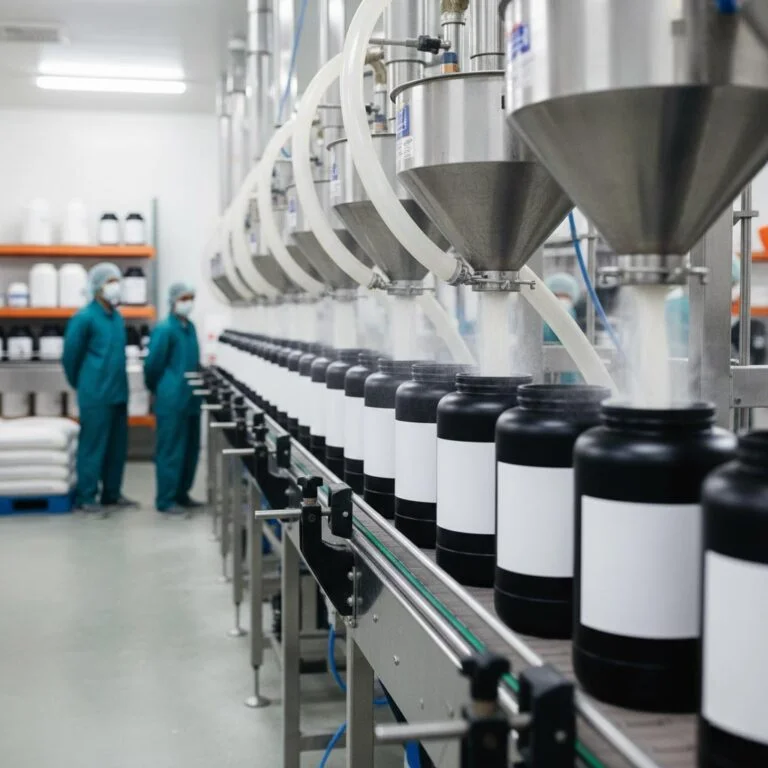
End-to-end supplement manufacturing services cover every stage of bringing a product to market, from initial concept through formulation, production, testing, packaging, labeling, and fulfillment, under a single manufacturing partner.
Rather than working with separate vendors for each step, brands rely on one team that und erstands the full lifecycle of the product. Here’s what that typically includes:
- Product concept – Defining the category, target consumer, and product goals.
- Formula development – Translating the concept into a workable formulation.
- Ingredient sourcing – Identifying and qualifying suppliers for raw materials.
- Manufacturing – Producing the product at pilot or commercial scale.
- Testing – Verifying identity, potency, purity, and safety.
- Packaging – Selecting containers and closures suited to the product.
- Label design – Creating labels that meet FDA labeling requirements.
- Fulfillment – Storing, picking, and shipping finished goods to customers or retailers.
- Shipping – Coordinating logistics to get product where it needs to go.
When one manufacturing partner manages all of these stages, brands typically see three practical advantages: efficiency, quality consistency, and clearer communication. Efficiency improves because there’s no need to re-explain specifications to a new vendor at each stage. Quality consistency improves because the same quality systems and standard operating procedures apply from formulation through packaging. And communication improves because a brand has one point of contact instead of juggling multiple suppliers with different timelines and processes.
This model is particularly valuable for supplement startups and DTC brands that don’t have in-house operations teams. It’s also useful for established brands adding new formats, such as moving from capsules into gummies or liquids, since the same partner can apply what they already know about the brand to a new product category.
Benefits of Choosing a USA-Based Supplement Manufacturer
Working with a USA-based supplement manufacturer gives brands closer regulatory oversight, faster communication, and shorter shipping timelines compared to overseas production.
For any product regulated as a dietary supplement, manufacturing within the United States means production is subject to FDA regulations and current Good Manufacturing Practice (cGMP) requirements under 21 CFR Part 111. These rules govern everything from facility conditions to batch recordkeeping, and they exist to help ensure that what’s on the label matches what’s in the product.
Key benefits of domestic manufacturing include:
- Regulatory alignment – Facilities operate under the same FDA framework that governs supplement labeling and marketing claims, reducing the risk of compliance gaps.
- cGMP manufacturing – Standardized processes for equipment, documentation, and personnel training help maintain batch-to-batch consistency.
- Faster communication – Shared time zones and language make it easier to resolve formulation questions or production issues quickly.
- Supply chain visibility – Brands can track ingredient sourcing and production status without the delays common in overseas coordination.
- Consumer trust – A growing number of consumers actively look for “Made in USA” claims when evaluating supplement brands.
- Shorter shipping timelines – Domestic production cuts weeks off lead times compared to importing finished goods.
- Regulatory confidence – Brands can more easily verify that a facility is FDA-registered and undergoes routine inspections.
None of this means overseas manufacturing is inherently unsafe, but it does mean that USA-based production generally offers a more direct line of accountability. When a batch needs to be adjusted or a question needs an answer, a domestic partner can typically respond in hours rather than days.
Custom Supplement Formulation and Product Development Process
Custom supplement formulation is the process of developing a unique product formula tailored to a brand’s specific goals, rather than using an existing off-the-shelf formula.
A well-run formulation process generally follows a predictable sequence:
- Product consultation – Understanding the brand’s target audience, positioning, and desired benefits.
- Market research – Reviewing category trends, competitor formulas, and consumer demand.
- Ingredient selection – Choosing active and inactive ingredients that align with the product’s goals and budget.
- Dosage optimization – Setting ingredient levels based on published research and label claim requirements.
- Flavor development – For powders, gummies, and liquids, refining taste and mouthfeel through iterative testing.
- Stability testing – Confirming the formula holds up over its intended shelf life under real storage conditions.
- Pilot batches – Producing a small-scale batch to validate the formula before committing to full production.
- Regulatory review – Checking that ingredient levels, claims, and labeling align with FDA requirements for dietary supplements.
- Commercial production – Scaling the validated formula into full production runs.
Custom formulation gives brands a way to differentiate in a crowded market. Instead of selling the same stock formula as a dozen competitors, a brand can build a product around a specific ingredient ratio, delivery format, or flavor profile that reflects its own positioning. This matters most for brands competing on quality or a specific health category, where a differentiated formula can support premium pricing and stronger customer loyalty.
It’s worth noting that formulation requirements , including allowable claims and ingredient restrictions , vary by product category and are governed by FDA regulations, so any new formulation should be reviewed against current requirements before commercial launch.
High-Quality Ingredient Sourcing and Raw Material Standards
Ingredient sourcing for dietary supplements involves qualifying suppliers, verifying material identity and purity, and maintaining traceability from raw material to finished product.
Raw material quality is one of the most important , and least visible , parts of supplement manufacturing. A finished product is only as reliable as the ingredients that go into it, which is why sourcing standards deserve close attention.
Core elements of a sound raw material program include:
- Supplier qualification – Vetting suppliers for quality systems, documentation practices, and regulatory compliance before approval.
- Certificates of Analysis (COAs) – Requiring documentation for every ingredient lot that confirms identity, potency, and purity.
- Identity testing – Confirming that a received ingredient is actually what the label claims it to be.
- Purity and potency verification – Testing for contaminants and confirming active ingredient concentration.
- Traceability – Maintaining lot-level records so any ingredient can be traced back to its source if a question arises.
- Domestic and imported ingredients – Applying the same qualification standards regardless of where a raw material originates.
- Quality assurance procedures – Documented processes that govern how incoming materials are inspected, tested, and released for production.
This level of diligence matters because ingredient quality issues , such as adulteration, contamination, or mislabeled potency , are among the most common causes of product recalls in the supplement industry. A manufacturing partner with a rigorous raw material program reduces this risk substantially, giving brands more confidence in the consistency of every batch.
Capsule Manufacturing Services for Dietary Supplements
Capsule manufacturing involves encapsulating powdered, granulated, or liquid ingredients inside a hard or soft shell, and remains one of the most widely used delivery formats in the supplement industry.
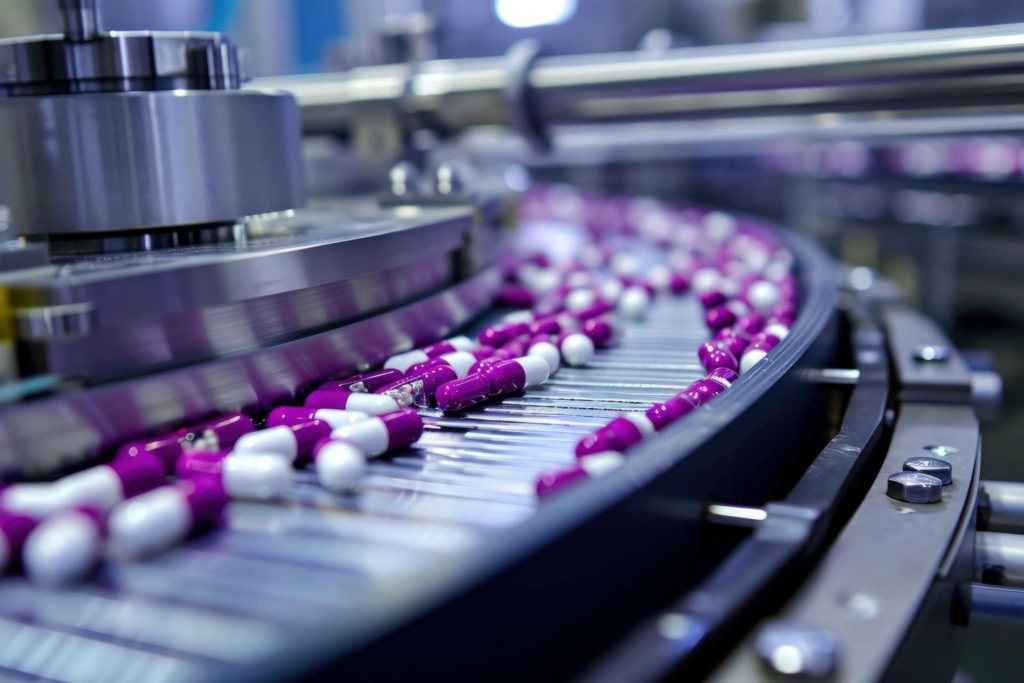
There are several capsule types brands can choose from, each suited to different formulation needs:
- Hard capsules – Two-piece shells typically made from gelatin or plant-based materials, filled with powder or granulated blends.
- Vegetarian capsules – Made from HPMC (hydroxypropyl methylcellulose) or similar plant-derived materials, suited to vegan and vegetarian product lines.
- Gelatin capsules – Made from bovine or fish-derived gelatin, offering a traditional capsule format at a lower cost.
- Delayed-release capsules – Designed to resist breakdown in the stomach, releasing contents further along the digestive tract for specific ingredients that benefit from targeted release.
The capsule filling process typically involves blending the active ingredients with excipients, running the blend through automated encapsulation equipment, and then polishing, inspecting, and packaging the finished capsules.
Capsules offer several practical benefits: they mask unpleasant tastes, allow for precise dosing, and are generally easier to swallow than tablets. Common ingredients formulated into capsules include vitamins, minerals, herbal extracts, probiotics, and specialty blends. As a private label capsule manufacturer, this format works well for brands targeting general wellness, immune support, digestive health, and multivitamin categories where consumers expect a familiar, easy-to-use product.
Powder Supplement Manufacturing for Sports and Wellness Brands
Powder supplement manufacturing covers the blending, mixing, and packaging of dry ingredient formulas, commonly used for protein, greens, hydration, and pre-workout products.
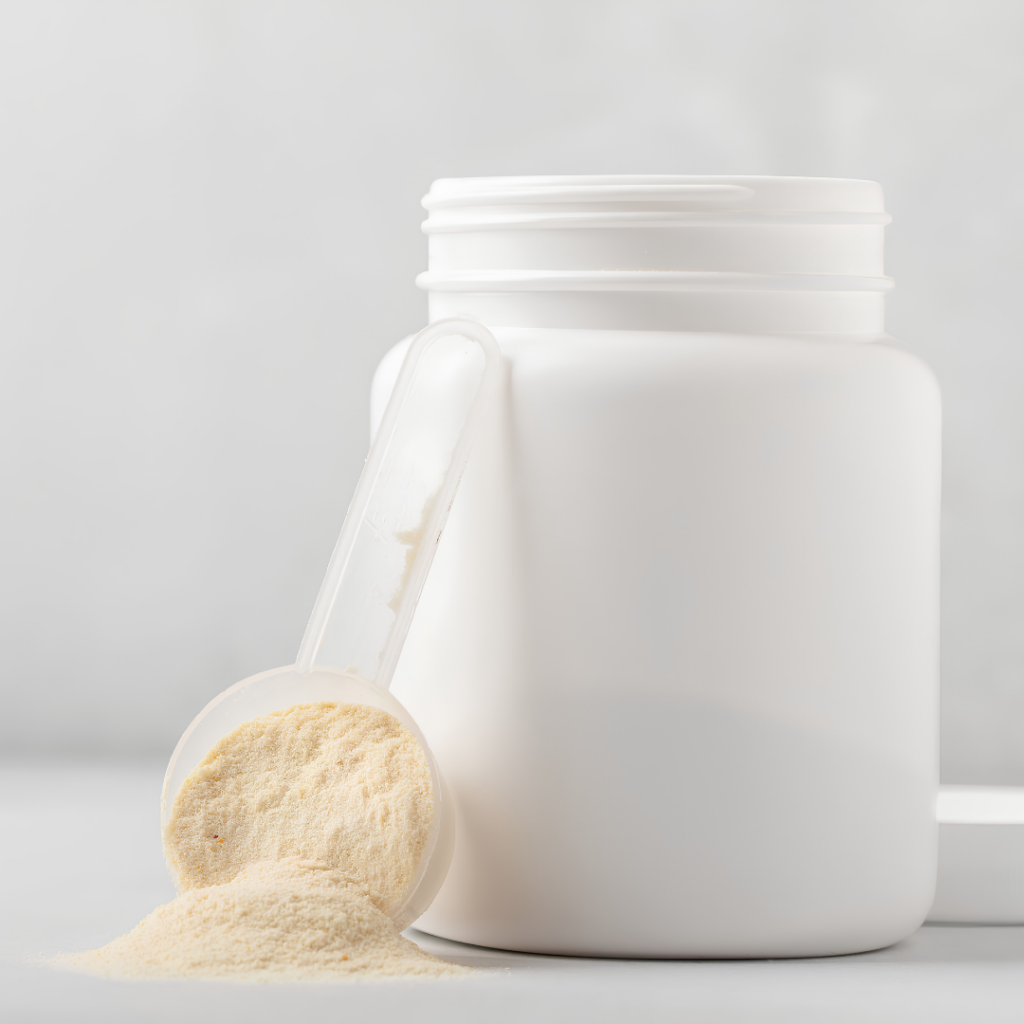
Powders remain a staple format for sports nutrition and wellness brands because they allow for high ingredient doses that would be impractical in capsule form. Common powder categories include:
- Protein powders – Whey, casein, or plant-based protein blends for muscle recovery and general nutrition.
- Greens powders – Blends of vegetables, fruits, and superfoods marketed for daily nutrient support.
- Hydration formulas – Electrolyte blends designed for fluid balance during exercise or daily use.
- Pre-workouts – Stimulant or non-stimulant blends formulated for energy and performance.
- Recovery supplements – Formulas combining amino acids, electrolytes, and other ingredients for post-exercise recovery.
Producing a quality powder product depends heavily on mixing consistency , ensuring that every scoop delivers the same ratio of ingredients as the last. This requires precise blending equipment and in-process testing to confirm homogeneity throughout a batch.
Flavor systems are another major consideration, particularly for protein and pre-workout products where taste heavily influences repeat purchases. Manufacturers typically work through multiple flavor iterations before locking in a final formula. On the packaging side, powders are commonly filled into tubs, stand-up pouches, or single-serving stick packs, depending on the target use case and price point.
Private Label Gummy Supplement Manufacturing
Private label gummy manufacturing allows brands to launch chewable supplement products using established formulas and production processes, customized with their own branding and flavor preferences.
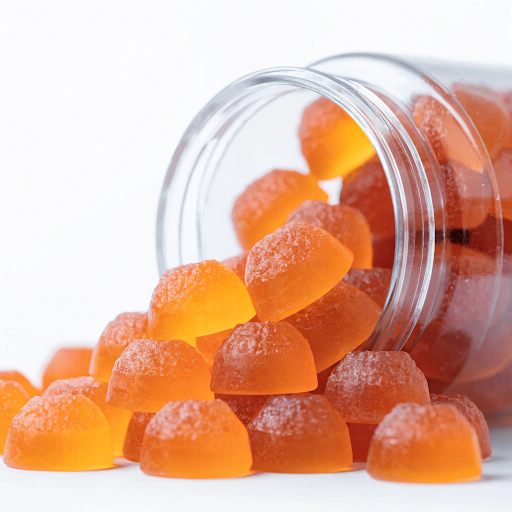
Gummies have become one of the fastest-growing supplement formats, largely because they solve a real consumer problem: many people simply don’t enjoy swallowing pills. That convenience factor has driven strong growth across vitamin, mineral, and functional gummy categories.
As a private label gummy manufacturer, production typically supports:
- Flavors – Fruit-based, sour, and specialty flavor profiles designed to mask the taste of active ingredients.
- Shapes – Standard shapes as well as custom molds for brand differentiation.
- Functional ingredients – Vitamins, minerals, adaptogens, and other activities suited to gummy delivery.
- Sugar-free options – Formulated with alternative sweeteners for brands targeting lower-sugar positioning.
- Vegan gummies – Made with pectin or other plant-based gelling agents instead of gelatin.
- Packaging – Bottles, pouches, and resealable containers suited to retail and DTC channels.
Gummies also carry strong consumer appeal from a branding standpoint , color, shape, and flavor all offer opportunities to make a product feel distinct on shelf or in an unboxing experience. That said, gummies have formulation limits that brands should understand upfront: not every active ingredient is stable or dosable in a gummy format, and some ingredients require higher doses than a gummy can practically deliver. A good formulation team will flag these limitations early rather than after a batch has already been produced.
Softgel Manufacturing for Vitamins and Specialty Supplements
Softgel manufacturing encapsulates liquid or oil-based ingredients inside a single-piece, sealed gelatin or plant-based shell, making it a preferred format for oil-soluble nutrients.
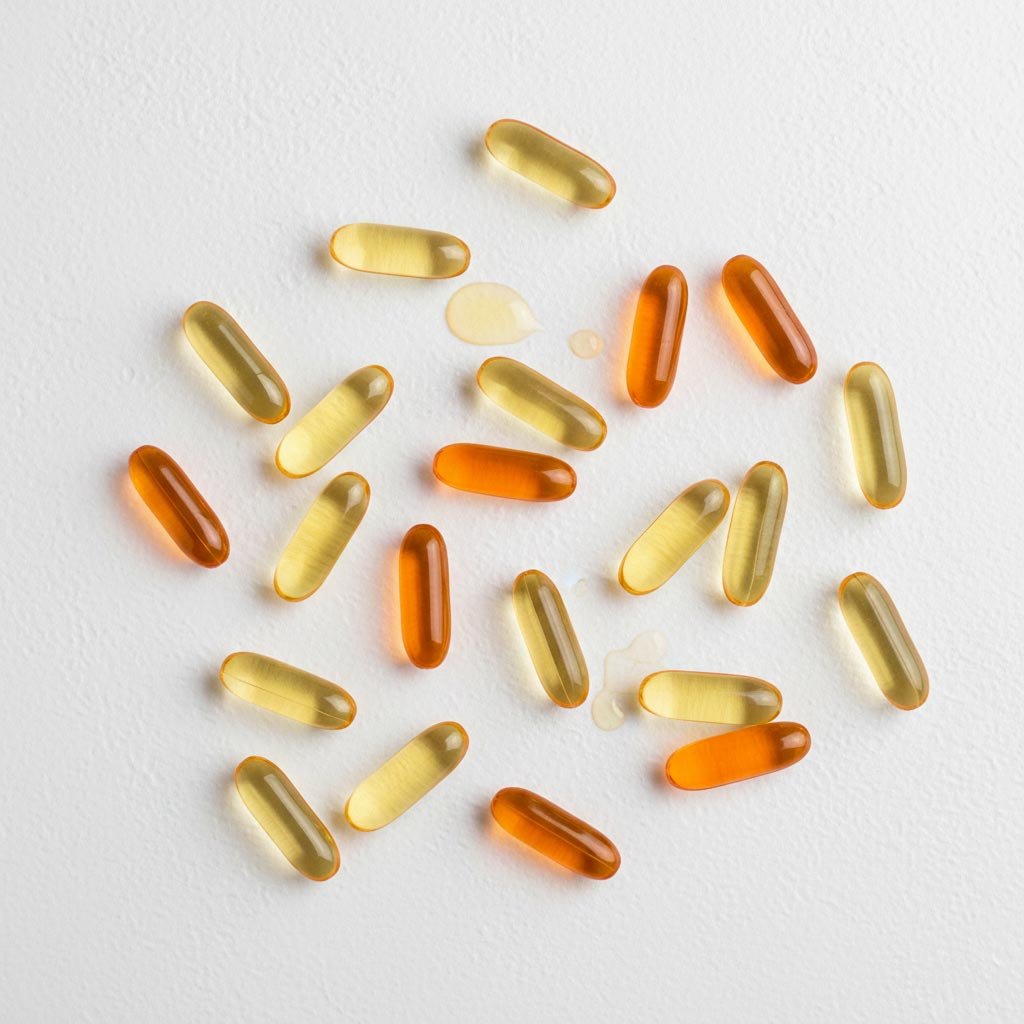
Softgels are especially well suited to ingredients that are naturally oil-based or benefit from a liquid delivery matrix, including:
- Fish oil and Omega-3 – Among the most common softgel applications, given the oil-based nature of the active ingredients.
- CoQ10 – An oil-soluble compound that benefits from softgel delivery for improved bioavailability.
- Vitamin D – Often formulated in an oil carrier and encapsulated for stability and absorption.
- CBD – Softgel delivery is used in some hemp-derived product lines, though formulation and marketing must comply with applicable state and federal regulations, which continue to evolve.
Softgels are generally favored for oil-based ingredients because the format keeps the active compound suspended in a stable carrier oil until it’s released in the digestive tract. This can support better bioavailability compared to a dry powder version of the same ingredient, since oil-soluble nutrients are often absorbed more efficiently when delivered alongside a lipid carrier.
Other softgel advantages include precise dosing, tamper-evident sealing, and a smooth, easy-to-swallow format that many consumers prefer over large tablets. Softgels do require specialized encapsulation equipment, which is one reason brands often look for a softgel supplement manufacturer with dedicated production capabilities rather than a general-purpose facility.
Liquid Supplement Manufacturing for Faster Absorption
Liquid supplement manufacturing produces vitamins, extracts, and functional formulas in a drinkable or dosable liquid format, often chosen for faster absorption and flexible dosing.
Liquid formats appeal to a wide range of consumers, including those who have difficulty swallowing capsules or tablets. Common liquid product categories include:
- Liquid vitamins – Multivitamin and single-nutrient formulas in a drinkable format.
- Herbal extracts – Concentrated botanical formulas, often delivered in small-dose bottles.
- Tinctures – Alcohol- or glycerin-based extracts dosed by dropper.
- Syrups – Thicker, often sweetened liquid formats used for certain nutrient categories.
- Functional beverages – Ready-to-drink formulas combining functional ingredients with flavor systems.
Formulating liquids introduces its own technical challenges, particularly around flavor masking , many active ingredients have strong, unpleasant tastes that are more noticeable in liquid form than in a capsule. Bottling requires equipment capable of consistent fill volumes and proper sealing to maintain product integrity during shipping and storage.
Shelf stability is another key consideration, since liquid formulas can be more prone to degradation or separation over time compared to dry formats. This is typically addressed through preservative systems, pH control, and stability testing conducted before commercial launch. For consumers, the main draw of liquid supplements is convenience , no swallowing capsules, easy dose adjustment, and often faster onset compared to formats that must first break down in the stomach.
GMP-Compliant Manufacturing, Quality Control, and Third-Party Testing
GMP-compliant manufacturing means production follows the FDA’s current Good Manufacturing Practice regulations for dietary supplements, covering facility conditions, documentation, and product testing at every stage.
Quality control in supplement manufacturing isn’t a single checkpoint , it’s a system that runs from raw material intake through finished product release. Key components include:
- cGMP – The regulatory framework (21 CFR Part 111) governing supplement manufacturing facilities in the United States.
- SOPs (Standard Operating Procedures) – Documented, repeatable processes for every step of production.
- Batch documentation – Detailed records for each production run, allowing full traceability if a question arises later.
- In-process quality checks – Testing conducted during production, not just at the end, to catch issues early.
- Finished product testing – Verifying the final product meets label claims before release.
- Heavy metals testing – Screening for contaminants such as lead, arsenic, cadmium, and mercury.
- Microbiology testing – Checking for harmful bacteria, yeast, and mold.
- Potency verification – Confirming that active ingredient levels match label claims within acceptable tolerances.
- Third-party laboratory testing – Independent labs verify results, adding an additional layer of objectivity.
- Certificates of Analysis (COAs) – Documentation provided for finished products, confirming test results for each batch.
Callout: A product that isn’t third-party tested isn’t necessarily unsafe, but independent verification gives brands and their customers an added layer of assurance that label claims match what’s actually in the bottle.
This layered approach to quality control is what separates a dependable bulk supplement manufacturer from one that simply produces product without meaningful oversight. Brands evaluating a manufacturing partner should ask directly what testing is performed, at what stage, and whether results are available for review.
Custom Packaging, Label Design, and Branding Solutions
Custom packaging and label design translate a finished supplement formula into a retail-ready product that reflects a brand’s identity and meets FDA labeling requirements.
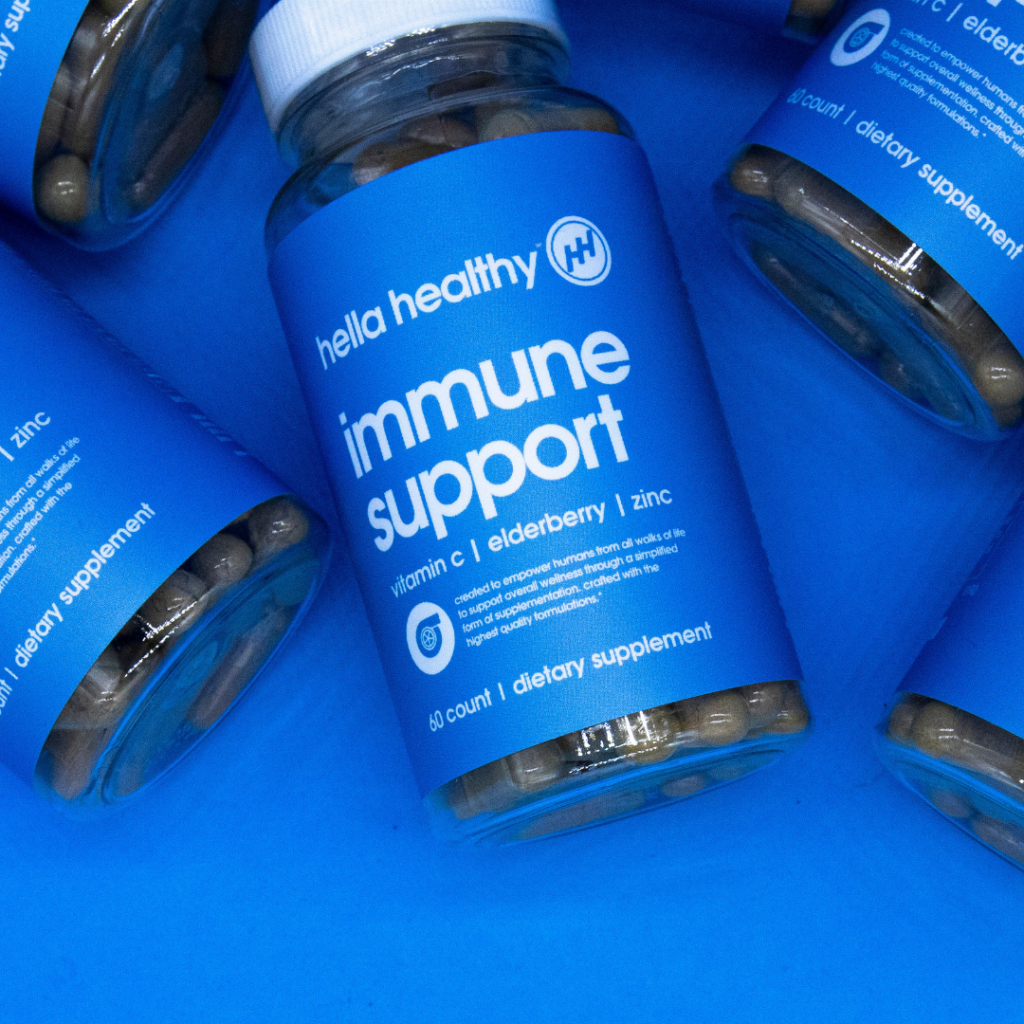
Packaging decisions affect more than aesthetics , they influence shelf stability, shipping costs, and how a product is perceived by consumers. Common packaging formats include:
- Bottles – The standard format for capsules, softgels, and tablets.
- Jars – Frequently used for powders and gummies.
- Pouches – Flexible, cost-effective, and popular for powders and single-serving formats.
- Sachets – Small, single-dose packets suited to travel-friendly or sample products.
- Stick packs – Individually portioned powder packaging, popular in hydration and pre-workout categories.
- Shrink sleeves – Full-coverage label wraps that allow for vibrant, 360-degree branding.
Bottle label printing and custom packaging labels must meet FDA labeling requirements, including Supplement Facts panels, ingredient lists, net quantity statements, and manufacturer information. Getting these details right isn’t optional , inaccurate or incomplete labeling is one of the more common compliance issues the FDA flags in the supplement category.
Beyond compliance, packaging plays a direct role in purchasing decisions. Retail-ready packaging needs to stand out on a shelf next to competitors, while DTC packaging often needs to create a strong unboxing experience. A growing number of brands are also asking about sustainable packaging options, such as recyclable materials or reduced plastic use, as consumer interest in environmental impact continues to grow.
Private Label vs. Custom Supplement Manufacturing
Private label manufacturing uses an existing formula that a brand can rebrand as its own, while custom manufacturing builds a unique formula from the ground up, each suited to different business goals and timelines.
Choosing between these two paths is one of the most common decisions supplement brands face, and the right choice depends on budget, timeline, and how important formula exclusivity is to the brand’s strategy.
| Factor | Private Label Manufacturing | Custom Supplement Manufacturing |
| Time to Market | Faster , formula already exists | Slower , requires formulation and testing |
| Investment | Lower upfront cost | Higher upfront cost |
| Exclusivity | Limited , formula may be used by other brands | High , formula is unique to the brand |
| Branding | Custom label on an existing formula | Full control over formula and branding |
| Formula Ownership | Typically owned by the manufacturer | Can be owned by the brand, depending on agreement |
| Flexibility | Limited formula adjustments | Full flexibility in ingredients and dosage |
| MOQ (Minimum Order Quantity) | Often lower | Often higher, due to development costs |
| Profit Margins | Moderate, given lower differentiation | Potentially higher, given differentiation |
| Long-Term Scalability | Good for testing market demand quickly | Strong for building long-term brand equity |
Private label supplements are a strong fit for brands that want to test a category quickly, launch with lower upfront investment, or move fast in a competitive niche. Custom supplement formulation services make more sense for brands focused on long-term differentiation, premium positioning, or a specific health category where a proprietary formula supports the brand story. Many brands actually start with a private label to validate demand, then transition into custom formulation as the product line matures.
Scalable Supplement Manufacturing for Startups and Established Brands
Scalable supplement manufacturing supports both small initial orders for new brands and high-volume production for established companies, without requiring a brand to switch manufacturing partners as it grows.
Growth-stage flexibility matters because switching manufacturers mid-growth can introduce formula inconsistencies, packaging changes, and delays that disrupt a brand’s momentum. A manufacturing partner built for scale typically supports:
- Low MOQs – Allowing startups to launch without overcommitting capital to inventory.
- Scaling production – Increasing batch sizes as demand grows, without re-qualifying a new facility.
- Forecasting support – Helping brands plan production schedules around seasonal or promotional demand.
- Inventory management – Coordinating raw material and finished goods inventory to avoid stockouts.
- Contract manufacturing – Ongoing production agreements that support consistent, repeatable output.
- Nationwide fulfillment – Distributing finished product efficiently across the country.
- International expansion – Supporting brands as they extend into new markets, where regulatory requirements may differ.
- Repeat production – Maintaining formula and quality consistency across every reorder.
This scalability matters just as much for an established brand launching a new product line as it does for a first-time founder. In both cases, the ability to grow production volume without renegotiating an entirely new manufacturing relationship saves time and reduces operational risk.
How to Choose the Right Supplement Manufacturing Partner in the USA
Choosing the right supplement manufacturing partner comes down to verifying regulatory compliance, production capabilities, and support services before committing to a production agreement.
Use this checklist when evaluating potential partners:
- FDA registration – Confirm the facility is registered with the FDA as required for dietary supplement manufacturing.
- cGMP compliance – Ask for documentation or certification confirming adherence to 21 CFR Part 111.
- Manufacturing experience – Look for a track record across the specific product categories you need.
- Product categories – Confirm the manufacturer can produce your intended formats (capsules, powders, gummies, softgels, liquids).
- Formulation expertise – Ask whether in-house formulation support is available or if you’ll need a separate formulator.
- Third-party testing – Verify that independent lab testing is part of the standard quality process.
- Packaging services – Confirm packaging and labeling are handled in-house or through a coordinated partner.
- Fulfillment capabilities – Ask whether the manufacturer offers warehousing and order fulfillment, or if you’ll need a separate 3PL.
- Customer support – Evaluate responsiveness and communication during the sales and quoting process, it’s often a preview of what production will be like.
- Scalability – Confirm the facility can grow with you from pilot batches to full commercial production.
- Transparency – Look for a willingness to share COAs, testing procedures, and production timelines upfront.
- Production capacity – Ask about current capacity and typical lead times to avoid surprises once you’re under contract.
Working through this list before signing an agreement helps surface potential gaps early, before they turn into production delays or quality issues down the line.
How End-to-End Supplement Manufacturing Simplifies Product Launch and Business Growth?
An end-to-end manufacturing partner manages product development, production, packaging, compliance, and fulfillment as one coordinated process, reducing the operational burden on the brand.
For a brand launching its first product, this means not having to separately manage a formulator, a production facility, a packaging vendor, a label designer, a compliance consultant, and a fulfillment center. Instead, one partner coordinates:
- Product development and formulation
- Manufacturing across capsules, powders, gummies, softgels, or liquids
- Packaging and label design
- Compliance with FDA labeling and manufacturing requirements
- Warehousing of finished goods
- Order fulfillment and shipping logistics
The practical effect is a shorter timeline from concept to shelf, fewer miscommunications between vendors, and a single point of accountability if something needs to be adjusted. This lets brand teams spend more of their time on marketing, sales, and customer growth rather than managing a fragmented supply chain. For supplement fulfillment company needs specifically, having this function integrated with manufacturing also means finished goods move directly from production into storage and shipping, without an extra transfer step that can introduce delays or damage.
Why Choose The Pure Nutra Labs?
The Pure Nutra Labs was built around the idea that supplement brands shouldn’t have to piece together their manufacturing process from multiple disconnected vendors. As a full-service supplement manufacturing services provider, the goal is to give brands a single, dependable partner across every stage of production.
That includes:
- Custom formulation – Working with brands to develop formulas suited to their specific goals, category, and audience.
- Manufacturing expertise – Production experience across capsules, powders, gummies, softgels, and liquids.
- Multiple dosage formats – Supporting brands that want to expand across product categories without switching partners.
- Quality assurance – Following cGMP-aligned processes and coordinating third-party testing to support label accuracy.
- Packaging – Offering a range of container and closure options suited to different product types and price points.
- Label support – Helping brands navigate FDA labeling requirements alongside brand design.
- Fulfillment – Coordinating warehousing and shipping so finished goods move efficiently from production to customer.
- Ongoing manufacturing support – Supporting repeat production runs and scaling volume as brands grow.
Rather than positioning itself as the only option or the largest facility in the industry, The Pure Nutra Labs focuses on being a manufacturing partner that brands can actually rely on , one that communicates clearly, documents its processes, and treats each product launch with the same level of care regardless of order size. Requirements vary by product category and applicable regulations, and the team works with brands to understand what’s needed for their specific formulation before production begins.
Conclusion
Choosing a supplement manufacturing partner is one of the most consequential decisions a brand will make , it affects product quality, timeline to launch, regulatory compliance, and ultimately, how consumers experience and trust the final product. End-to-end supplement manufacturing services simplify this decision by consolidating formulation, production, testing, packaging, and fulfillment under one accountable partner, rather than leaving brands to coordinate a patchwork of vendors on their own.
Whether you’re a startup preparing to launch your first capsule or gummy product, or an established brand looking to expand into softgels or liquids, the right manufacturing partner should offer more than production capacity , it should offer transparency, regulatory diligence, and the flexibility to grow with your business.
The Pure Nutra Labs is available to talk through your specific supplement manufacturing goals, whatever stage you’re at. If you’re evaluating formulation options, comparing private label versus custom manufacturing, or simply trying to understand what a realistic production timeline looks like for your product, reach out to start that conversation. A clear, well-informed manufacturing plan today is what makes a confident product launch possible tomorrow.