

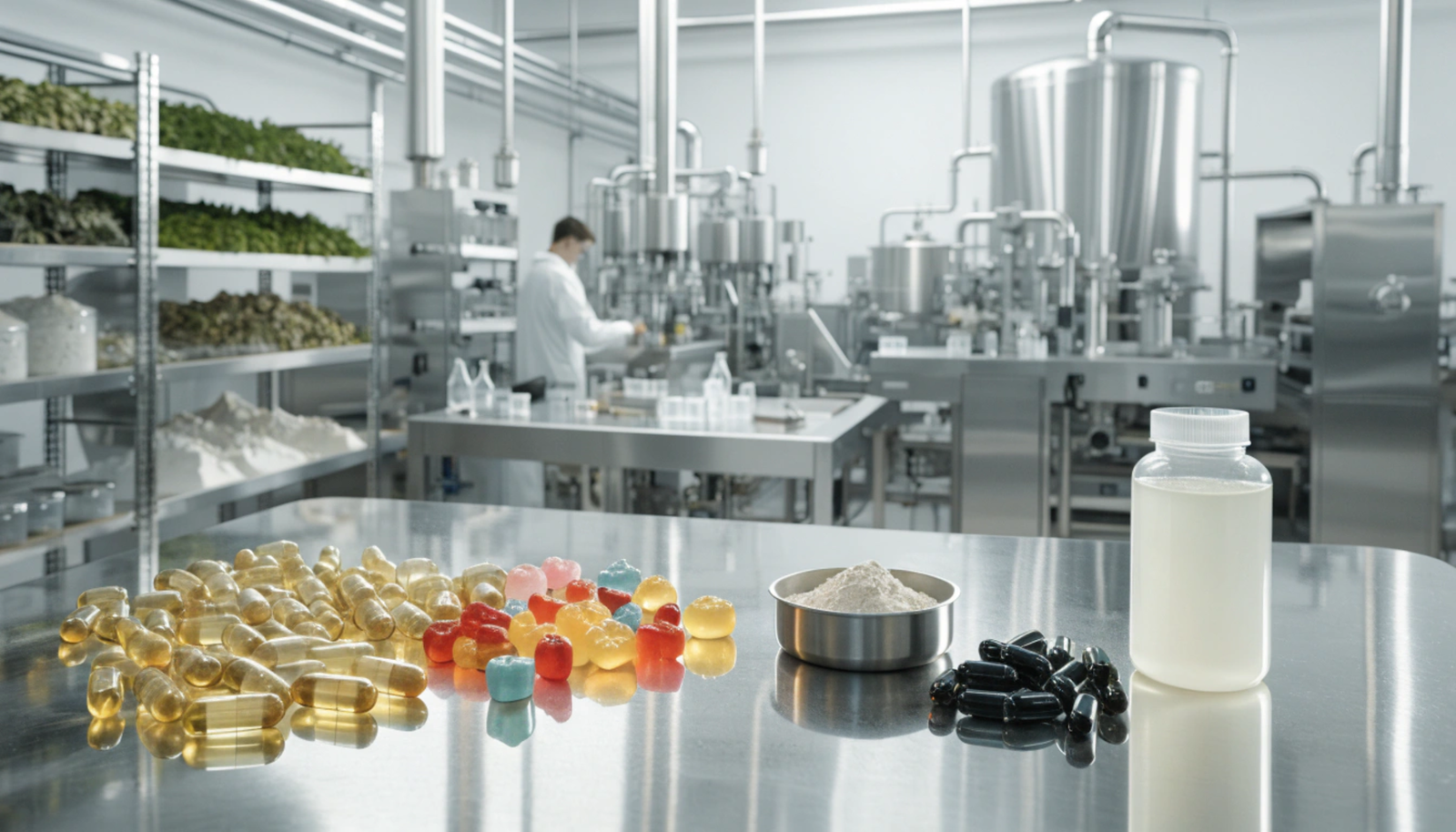
A founder with a great product idea and no manufacturing plan is not yet a supplement brand, they are a marketing plan waiting on a factory. That gap is where most first-time supplement companies stall, and it’s where established brands lose the most money when they pick the wrong partner. Formulation, ingredient sourcing, batch production, quality control, packaging, labeling, and fulfillment all have to work together, on schedule, without cutting corners that could later show up as a failed test, a delayed launch, or a customer complaint.
Choosing a manufacturing partner is one of the highest-stakes decisions a supplement brand will make. It affects product quality, cost structure, regulatory exposure, timelines, and how quickly the business can scale once demand shows up. It’s also more complicated than it used to be. Retailers and marketplaces are asking more questions about documentation. Consumers are reading labels more closely. And the number of product formats, ingredient categories, and go-to-market channels has expanded well beyond capsules-in-a-bottle.
This guide walks through the entire supplement manufacturing ecosystem: what supplement manufacturing services actually include, how the production process works from concept to shelf, how to evaluate a manufacturing partner, what separates private label from custom formulation, how quality control and GMP compliance function in practice, and what it costs to bring a product to market. It’s written for people who are building or scaling a supplement brand and want a clear, honest picture of how the process actually works, not a sales pitch.
What Are Supplement Manufacturing Services and How Do They Work?
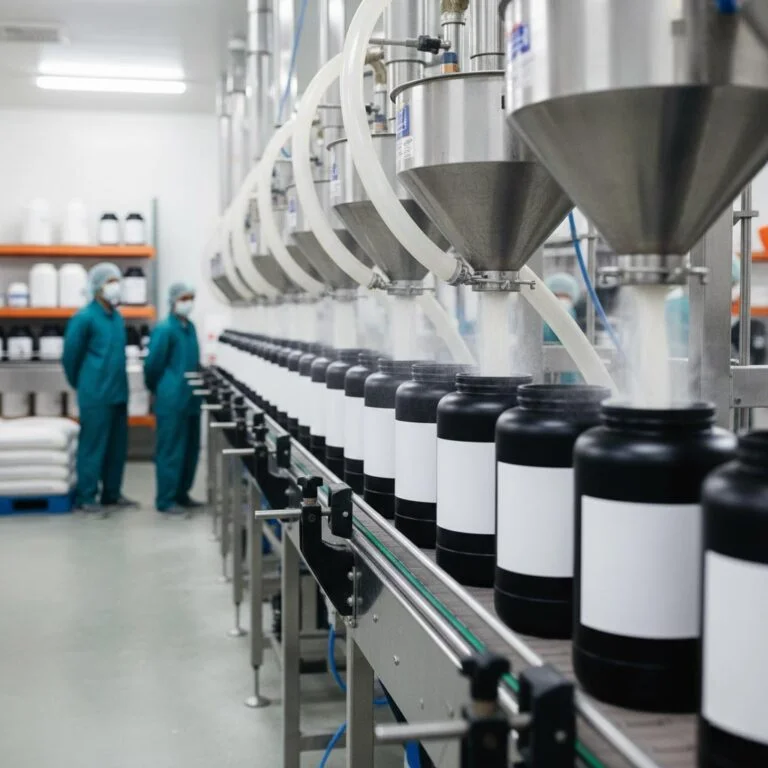
Supplement manufacturing services refer to the full range of production and business support a manufacturer provides to bring a dietary supplement from concept to a finished, sellable product, including formulation, ingredient sourcing, production, quality control, packaging, labeling, and often fulfillment.
In practice, this means a brand can hand off nearly everything after the product idea to a manufacturing partner rather than building that infrastructure itself.
It helps to separate two things that get lumped together: manufacturing versus simply sourcing a finished product. Some businesses buy pre-made, already-labeled supplements from a distributor and resell them, that’s not manufacturing, it’s retail arbitrage. A supplement manufacturer, by contrast, actually produces the product: weighing raw materials, blending them according to a formula, encapsulating or bottling them, and applying quality checks along the way. This is the difference between owning a supply chain and renting shelf space in someone else’s.
Within manufacturing, there are a few common working models:
- Contract manufacturing — the manufacturer produces a supplement to your specifications (or helps develop those specifications), and you own the brand and sales relationship.
- Private-label manufacturing — the manufacturer already has an existing, tested formula that you can put your own label on, which shortens development time considerably.
- Custom manufacturing — the formula is developed specifically for your brand, from ingredient selection through dosage and format, giving you more control but requiring more development time.
A full-service contract supplement manufacturer typically supports formulation guidance, ingredient sourcing, production, quality control, packaging, labeling, warehousing, and fulfillment under one roof, or through closely coordinated partners. That matters because a break anywhere in that chain, a sourcing delay, a label error, a fulfillment bottleneck, can stall a launch even if the product itself is fine.
The Typical Journey From Idea to Shelf
Most projects move through a recognizable sequence:
Idea then product concept then formula then ingredient sourcing then testing then manufacturing then quality control then packaging and labeling then finished product then fulfillment.
Working with an experienced manufacturing partner doesn’t eliminate any of these stages, but it does mean someone with production experience is guiding decisions at each step instead of the brand owner learning batch records, ingredient specifications, and labeling requirements from scratch under a launch deadline.
A practical example:
A founder approaches a manufacturer with an idea for a magnesium-and-melatonin sleep gummy. The manufacturer’s team asks about target dosage, flavor preference, packaging size, and whether the founder wants a stock formula or something custom. If a suitable stock gummy formula already exists, the brand can move to labeling and packaging relatively quickly. If the founder wants a unique ratio of ingredients or a specific flavor profile, the manufacturer moves into formulation development, small-batch prototyping, taste and stability testing, and adjustment, before scaling to a full production run. Either path involves the same underlying stages; custom development simply adds time and iteration at the front end.
Why More Brands Are Outsourcing Supplement Manufacturing in 2026?
Building an in-house production facility is expensive and slow: equipment, facility build-out, staffing, and the compliance infrastructure required under FDA’s dietary supplement cGMP regulation (21 CFR Part 111) all have to be in place before a single bottle can legally ship. Most brands, including many well-funded ones, never attempt it, and that’s a reasonable business decision rather than a shortcut.
Outsourcing to a supplement manufacturing company gives a brand access to things that are impractical to build alone:
- Lower infrastructure requirements.
No need to lease and equip a production facility or maintain specialized machinery for encapsulation, gummy depositing, or softgel production.
- Reduced capital expenditure.
Capital that would go toward equipment and facilities can instead fund marketing, inventory, or product development.
- Access to specialized equipment
For the specific delivery format a brand wants, encapsulators, tablet presses, gummy molds, softgel machines, liquid filling lines, without owning any of it.
- Formulation expertise.
Experienced formulators understand ingredient interactions, stability, and dosing in ways that are hard to replicate without years of hands-on production experience.
- GMP-compliant manufacturing environments
Already built and operating under 21 CFR Part 111, rather than a brand having to construct and validate that compliance infrastructure itself.
- Established quality-control systems
Including component testing, in-process checks, and batch documentation.
- Faster product development
Because the manufacturer already has processes, suppliers, and equipment in place rather than starting from zero.
- Scalable production capacity
The ability to grow from a pilot run to a much larger order without rebuilding a supply chain.
- Ingredient sourcing relationships
With established suppliers, which matters for both cost and reliability.
- Packaging and labeling support
Reducing the number of separate vendors a brand has to coordinate.
- Fulfillment support
Connecting production directly to order shipping.
- Less operational complexity overall
Freeing founders to focus on marketing, sales, customer acquisition, and brand development instead of production logistics.
It’s worth being precise about what’s established fact versus reasonable business inference here. It’s a documented regulatory reality that dietary supplement manufacturers, packagers, labelers, and holders operating in the U.S. must comply with 21 CFR Part 111. It’s an observable market pattern that a large share of supplement brands, from small DTC startups to established wellness companies expanding into new categories, use contract or private-label manufacturers rather than operating their own plants. The business implication that outsourcing “lets founders focus on marketing and growth” is a reasonable inference from that pattern, not a guaranteed outcome; results still depend on the manufacturer chosen and how the relationship is managed.
Types of Supplements You Can Manufacture: Capsules, Gummies, Powders, Softgels & Liquids
Not every ingredient works in every delivery format, and choosing a format is a real product decision, not an afterthought. Here’s how the major formats compare.
Capsules
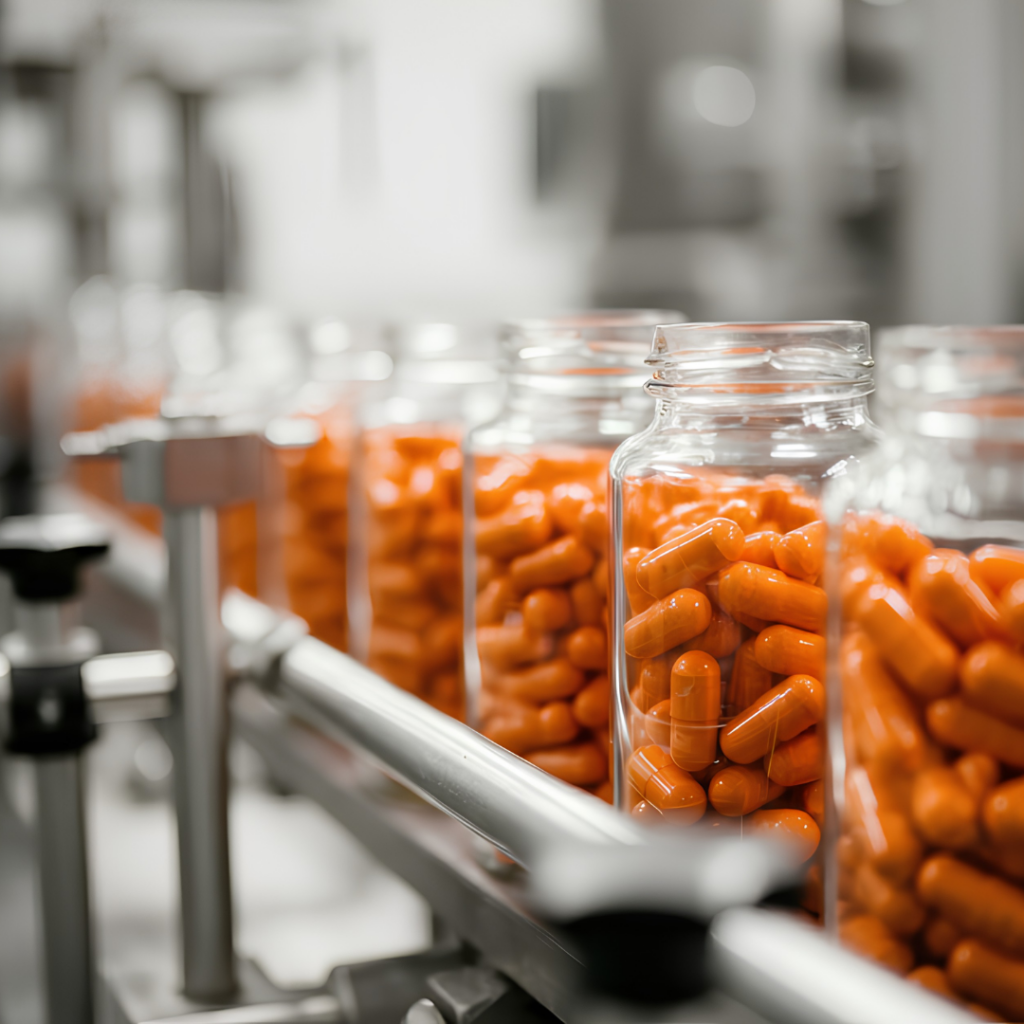
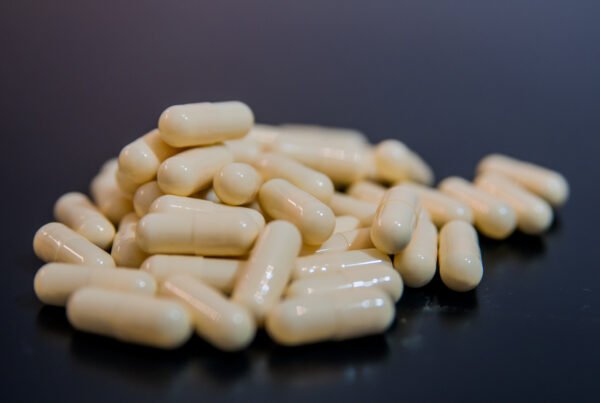
Capsules remain a workhorse format because they’re relatively fast to produce, mask taste and odor, and accommodate a wide range of powdered ingredients, from single vitamins to multi-ingredient blends. They work well for brands positioning around clinical-feeling, no-frills efficacy, sports nutrition, general wellness, and condition-specific formulas. Dosage flexibility is good, since capsule size can be adjusted, but very high-dose or bulky ingredients may require multiple capsules per serving. A capsule supplement manufacturer will typically ask about capsule type (vegetable or gelatin), fill weight, and whether ingredients are compatible with encapsulation before finalizing a formula.
Gummies
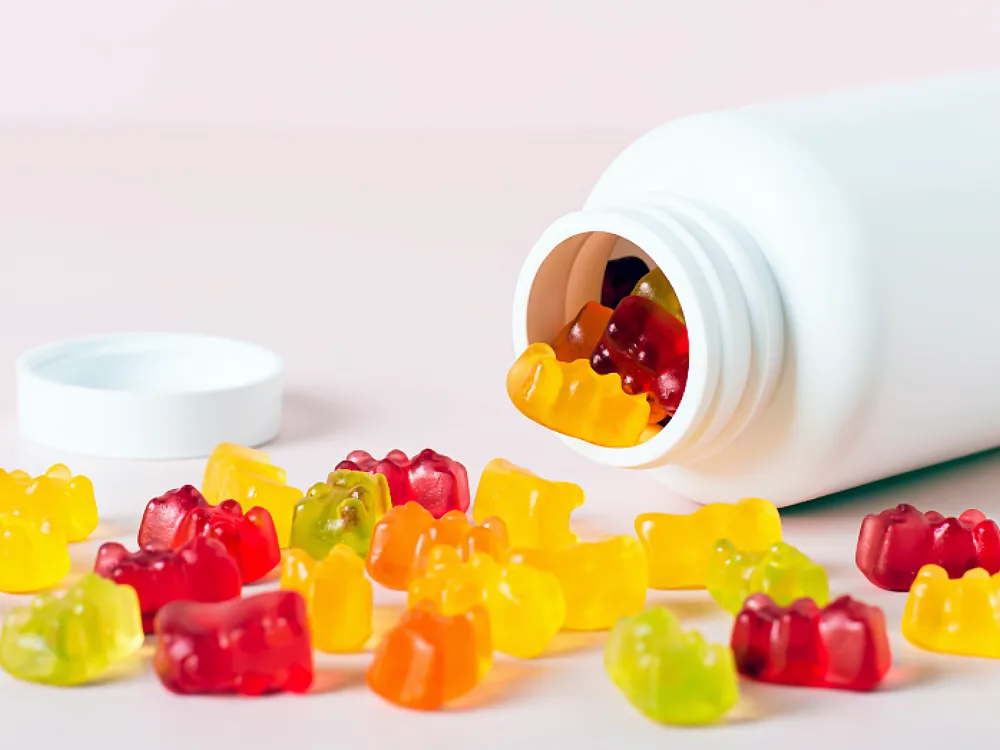
Gummies have strong consumer appeal, particularly for vitamins, minerals, and wellness categories where taste and format matter to repeat purchase. But gummy production is more complex than it looks: not every active ingredient is stable or palatable in a gummy matrix, some ingredients have dosing limits driven by serving size and sugar or pectin content, and flavor masking for bitter actives (like certain minerals or herbal extracts) takes real formulation work. A private label gummy manufacturer with format-specific experience will flag ingredient compatibility issues early rather than after a failed prototype batch.
Powders
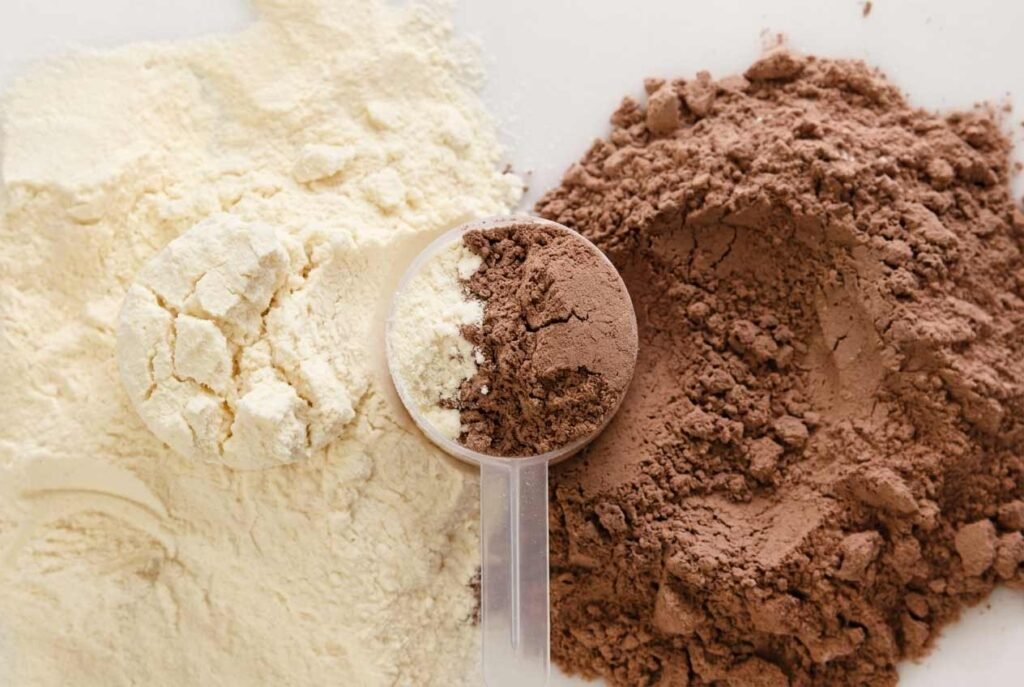
Powders cover a wide range, protein blends, functional powders, pre-workouts, greens blends, and drink mixes. Key considerations include solubility (does it mix cleanly or clump), flavoring strategy, and serving size, which affects both dosing accuracy and packaging format. Private label powder supplements are a common entry point for brands because stock powder bases exist across many categories, letting a brand launch with flavor and branding customization rather than full formulation from scratch.
Softgels
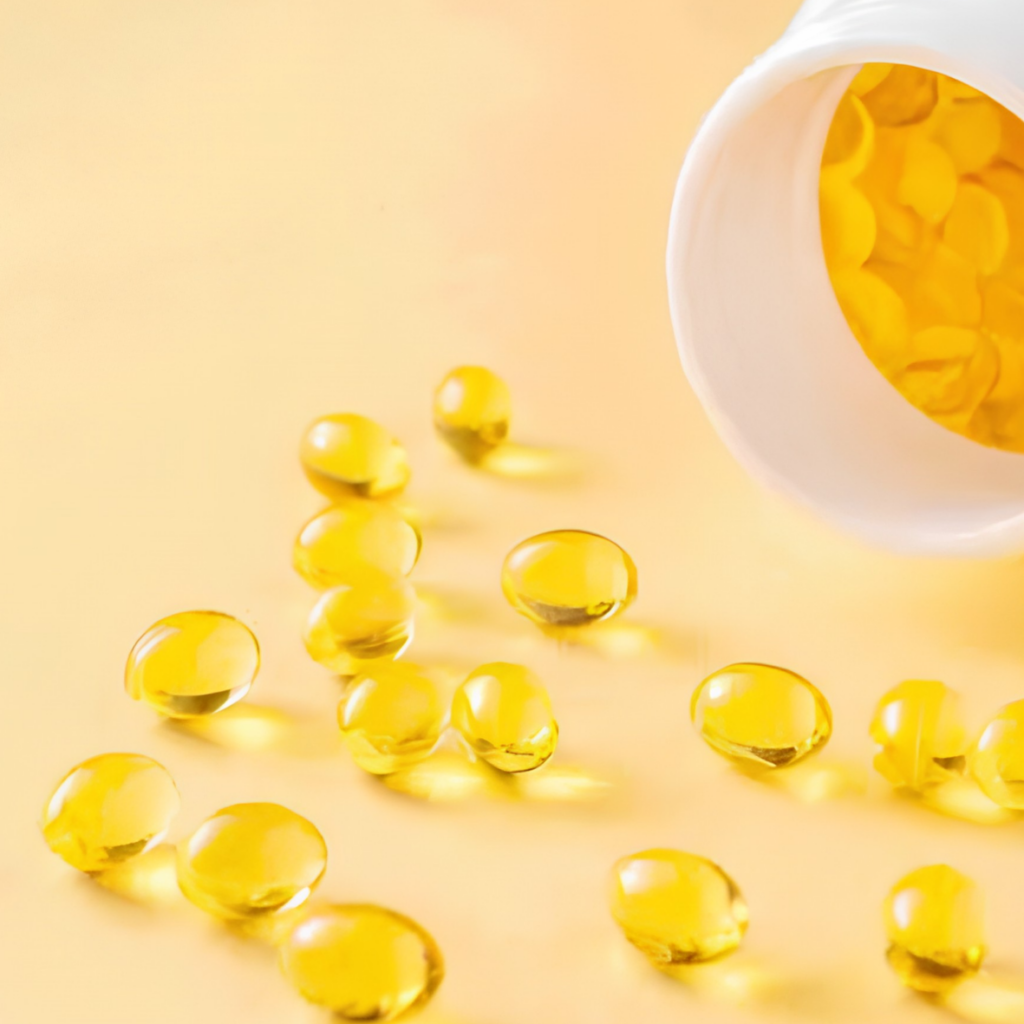
Softgels are the standard format for oil-based and fat-soluble ingredients, omega-3s, vitamin D, vitamin E, and other lipophilic activities that don’t dissolve well as dry powders. Encapsulation requires specialized equipment, and stability and storage considerations (oxidation, moisture, temperature) matter more here than in dry formats. A softgel supplement manufacturer typically has dedicated encapsulation lines and experience managing oil-based fill stability.
Liquids
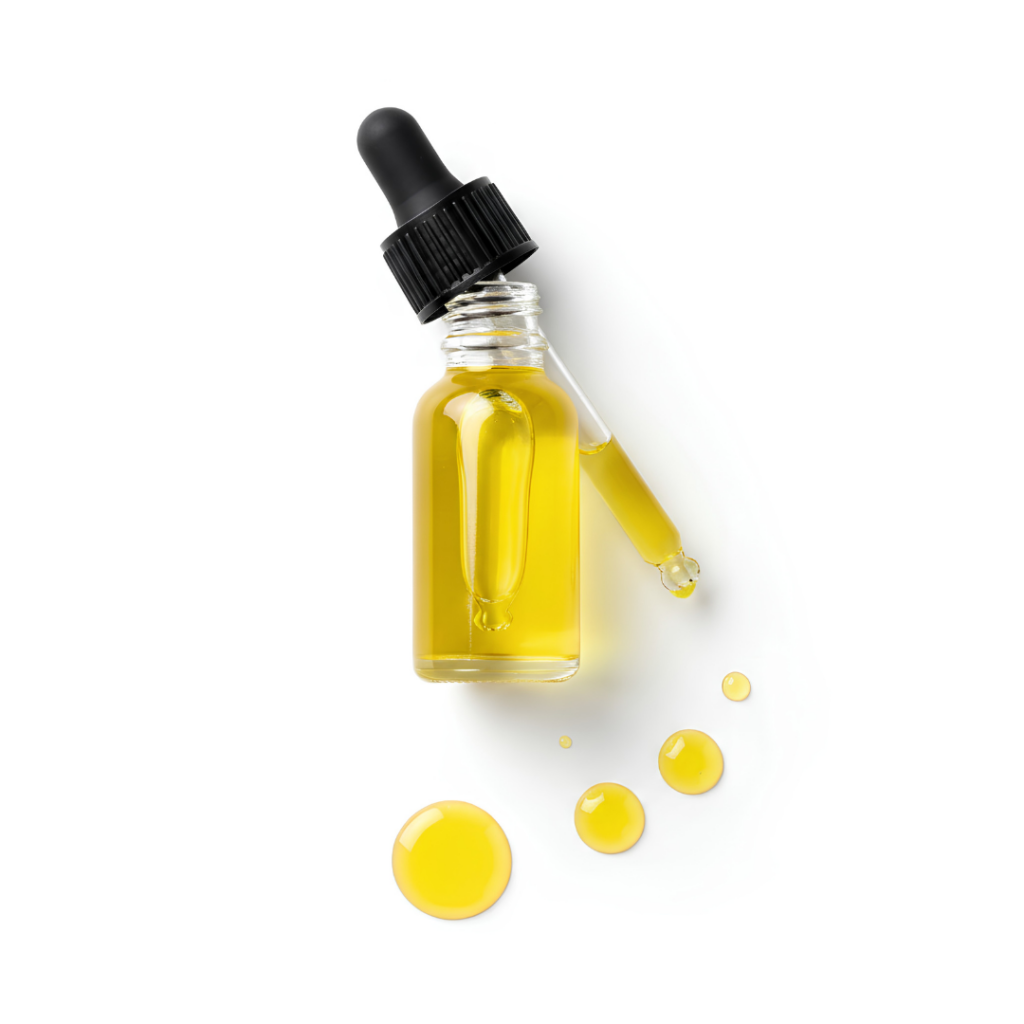
Liquid formats include liquid vitamins, herbal tinctures and formulations, and liquid shots. They allow for fast absorption positioning and can be easier for some consumers (particularly children or older adults) to take than pills. Flavoring, preservation, and stability over shelf life are bigger considerations here than in solid dosage forms, and packaging (dropper bottles, single-serve shots, multi-serve bottles) affects both cost and user experience. A liquid supplement manufacturer will typically evaluate preservative systems and pH stability as part of formulation.
| Format | Common Uses | Advantages | Key Considerations | Best For |
| Capsules | Vitamins, minerals, multi-ingredient blends | Fast to produce, taste-masking, flexible dosing | Fill weight limits for bulky ingredients | Clinical-feeling wellness and sports nutrition brands |
| Gummies | Vitamins, minerals, wellness formulas | High consumer appeal, no swallowing pills | Ingredient compatibility, flavor masking, dosing limits | Brands prioritizing taste and repeat-purchase experience |
| Powders | Protein, functional blends, drink mixes | Flexible serving size, flavor customization | Solubility, clumping, mixing experience | Sports nutrition and functional beverage-style brands |
| Softgels | Omega-3s, vitamin D/E, oil-based actives | Good for fat-soluble ingredients, stable fill | Requires oil-compatible actives, oxidation control | Fish oil, fat-soluble vitamin, and oil-based formulas |
| Liquids | Liquid vitamins, tinctures, shots | Fast perceived absorption, easier to consume | Preservation, flavor, shelf stability | Brands targeting fast-absorption positioning or easier dosing |
The Complete Supplement Manufacturing Process: From Concept to Finished Product
How does supplement manufacturing work?
In broad terms, a product moves through concept development, formula development, ingredient sourcing, prototyping, testing, batch manufacturing, quality control, packaging, labeling, and fulfillment, each stage feeding documentation and specifications into the next. Here’s what happens at each stage in more depth.
Step 1: Product Concept
Before any formula work begins, a manufacturer will typically want to understand the target customer, the product’s core objective, the desired benefits, how it will be positioned against competitors, and the intended delivery format. This isn’t paperwork for its own sake, it directly shapes formulation decisions later, since a “clean label, minimal ingredient” positioning leads to different formula choices than a “maximum potency” positioning.
Step 2: Formula Development
This is where ingredient selection, dosage levels, ingredient compatibility, flavor, texture, and stability get worked out. Regulatory considerations come into play here too, certain ingredient combinations, dosage levels, and claims carry different requirements depending on the product category and market. Brands wanting a unique product typically engage custom supplement formulation services at this stage, where a formulator works iteratively on ingredient ratios and delivery-format compatibility rather than starting from an existing template.
Step 3: Ingredient Sourcing
Ingredients need to come from qualified suppliers who can document identity, purity, and potency, typically through a Certificate of Analysis (CoA) and supporting supplier documentation. Traceability matters here: being able to trace a raw material back to its supplier and testing records is part of what 21 CFR Part 111 requires of manufacturers, and it’s foundational to catching a quality problem before it reaches a finished batch.
Step 4: Prototype / Sampling
Before committing to a full production run, manufacturers typically produce small prototype batches. This lets the brand evaluate taste, texture, appearance, and stability, and lets the formulator catch problems, like an ingredient that doesn’t dissolve cleanly or a flavor that needs adjustment, while the cost of a mistake is still low.
Step 5: Testing
Testing happens at multiple points. Raw materials generally undergo identity testing to confirm the ingredient is actually what the supplier says it is, under FDA’s dietary supplement cGMP rule, manufacturers must verify the identity of dietary ingredients before use, and a supplier’s Certificate of Analysis alone is generally not sufficient for that requirement. Depending on the ingredient and product, additional testing may include microbial testing, heavy-metal screening, and potency analysis. Finished products may also undergo verification testing, and depending on the product’s intended shelf life, stability testing may be used to confirm the formula holds up over time. Not every product requires every possible test, the applicable testing depends on the ingredient, product category, and intended market.
Step 6: Manufacturing
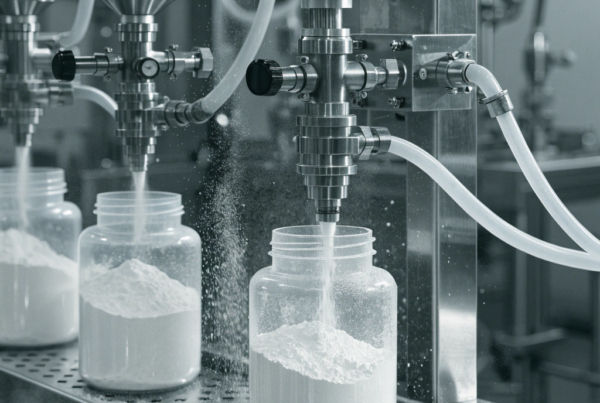
This is the physical production stage: raw materials are weighed against the batch formula, blended, and then processed according to format, encapsulated for capsules, deposited and set for gummies, milled and blended for powders, encapsulated in a gelatin or plant-based shell for softgels, or mixed and filled for liquids. Each format has its own equipment and process controls.
Step 7: Quality Control
Throughout manufacturing, in-process checks confirm the batch is tracking to specification, weight checks, visual inspection, and documentation at each stage. Batch records capture what happened during production, which supports both internal quality assurance and any downstream investigation if a problem arises. Finished-product verification confirms the completed batch meets its specifications before it’s released for packaging.
Step 8: Packaging
Packaging choices depend heavily on product format and positioning: bottles for capsules, softgels, and liquids; pouches or sachets for single-serve powders; jars for larger powder quantities; and boxes for retail presentation. Packaging also has to protect the product, moisture sensitivity, light sensitivity, and oxidation risk all factor into material choice.
Step 9: Labeling
Supplement labeling in the U.S. generally needs to include a Supplement Facts panel, a full ingredient declaration, serving size and directions, any applicable warnings, manufacturer or distributor information, and lot or batch coding for traceability. Exact requirements vary depending on the product, its ingredients, and the market it’s sold into, so labeling should be reviewed against applicable requirements for the specific product rather than assumed from a template.
Step 10: Fulfillment
Once a product is finished, packaged, and labeled, it needs somewhere to go. Supplement fulfillment services connect production directly to warehousing, order processing, pick-and-pack, and shipping, which matters most for DTC and eCommerce brands that need inventory to flow smoothly into Shopify, Amazon, or marketplace orders without a separate fulfillment vendor and the coordination overhead that comes with it.
Custom Supplement Formulation vs. Stock Formulas: Which Is Right for Your Brand?
One of the earliest and most consequential decisions a brand makes is whether to launch with a stock (ready-made) formula or invest in a custom one.
Stock / Ready-Made Formulas
A stock formula is one the manufacturer has already developed and produced, which a brand can put its own label on. The main advantage is speed, since the formula, testing, and often the production process are already established; a brand can move from decision to finished product much faster than with custom development. It also lowers development complexity and risk, since the formula’s performance and stability are already known. The trade-off is differentiation: if a competitor can access the same stock formula, the brand’s product isn’t unique on formula alone, which puts more pressure on branding, positioning, and marketing to stand out.
Custom Formulas
A custom formula is developed specifically for the brand, unique ingredient ratios, a specific dosage strategy, a particular flavor profile, or a delivery format tailored to the brand’s positioning. This gives the brand real control and a genuinely differentiated product, which matters more as a category gets crowded. The trade-off is time and cost: formulation, prototyping, and testing take longer than starting from an existing formula, and testing requirements may be more extensive since the formula hasn’t already been validated in production.
| Factor | Stock Formula | Custom Formula |
| Development time | Fast — often weeks | Longer, often weeks to months |
| Customization | Limited to flavor/branding | Full control over ingredients and dosage |
| Cost | Lower upfront development cost | Higher upfront development cost |
| Differentiation | Lower — formula may be shared across brands | Higher, formula is brand-specific |
| Product uniqueness | Standard | Distinct |
| Best for | Fast validation, testing a new category, tight budgets | Established positioning, premium brands, highly differentiated products |
A practical framework:
New startups validating a first product with limited capital often benefit from starting with a stock formula to get to market and gather real customer feedback before investing in custom development. Established brands with proven demand, premium brands built around a distinct value proposition, and companies developing a highly differentiated product usually get more value from custom formulation, since differentiation is often the point. Brands testing a new category for the first time sometimes use a stock formula to validate demand cheaply before committing to a custom version once the category proves out.
How to Choose the Right Supplement Manufacturing Partner?
Price is the easiest thing to compare between manufacturers and the least reliable way to choose one. A lower quote that comes with longer lead times, weaker documentation, or limited testing capability can cost far more in delays, rework, or a failed retail audit than the difference in per-unit price ever would.
A more complete evaluation looks at:
- Manufacturing capabilities — which formats and processes the manufacturer actually produces in-house versus subcontracts out.
- Product formats — whether they support the specific format you need (capsules, gummies, powders, softgels, liquids).
- Formulation expertise — depth of experience developing and troubleshooting formulas, not just producing existing ones.
- GMP compliance — operating under applicable dietary supplement cGMP requirements.
- Quality-control systems — documented in-process checks and finished-product verification.
- Testing capabilities — what’s tested in-house versus sent to third-party labs.
- Ingredient sourcing — supplier qualification process and documentation standards.
- Minimum order quantities (MOQs) — whether they align with your budget and volume stage.
- Production capacity — whether they can support growth, not just your first order.
- Lead times — realistic timelines for both first orders and reorders.
- Packaging options — range of formats and materials available.
- Labeling support — whether label design and compliance review are handled in-house.
- Fulfillment — whether warehousing and shipping are integrated or separate.
- Communication — responsiveness and clarity throughout the process, not just during sales.
- Scalability — capacity to grow with you from pilot run to larger volumes.
- Transparency — willingness to share documentation and answer direct questions.
- Documentation — batch records, CoAs, and specification sheets available on request.
- Pricing structure — how costs break down by ingredient, format, volume, and services.
| Evaluation Area | Questions to Ask | Why It Matters? |
| Capabilities | Which formats do you produce in-house? | Subcontracted work adds coordination risk |
| Compliance | Are you operating under applicable dietary supplement cGMP requirements? | Baseline for legal, quality operation |
| Testing | What testing is in-house vs. outsourced? | Affects turnaround and cost transparency |
| MOQs | What’s your minimum for my format and packaging? | Determines whether this fits your stage |
| Documentation | Can I see a sample CoA or batch record? | Signals real quality systems, not just claims |
| Scalability | What happens if I need 5x my first order? | Avoids re-sourcing a new manufacturer mid-growth |
Understanding Quality Control, GMP Compliance, and Third-Party Testing
What GMP Means for Supplement Manufacturing
Good Manufacturing Practice, in the context of U.S. dietary supplements, refers specifically to FDA’s regulation at 21 CFR Part 111, finalized in 2007, which requires manufacturers, packagers, labelers, and holders of dietary supplements to follow documented controls to help ensure product quality. The rule covers facility controls and sanitation, personnel qualification and training, equipment design and maintenance, production and process controls, quality control operations, and record-keeping and traceability. This is a legal requirement, not an optional best practice, it applies, operation by operation, to any facility that manufactures, packages, labels, or holds dietary supplements sold in the United States.
Quality Control vs. Quality Assurance
These terms get used interchangeably, but they describe different functions. Quality control (QC) refers to the specific testing and inspection activities that check whether a product meets its specifications, identity testing, potency testing, in-process weight checks, finished-product verification. Quality assurance (QA) refers to the broader system of processes, documentation, and oversight designed to prevent quality problems from happening in the first place, SOPs, training programs, supplier qualification, and batch record review. QC catches problems in a specific batch; QA is the system designed to reduce how often those problems occur.
Third-Party Testing
Third-party testing means sending samples to an independent laboratory, not owned or operated by the manufacturer or brand, to verify identity, potency, or the absence of contaminants. Brands may pursue this for an added layer of verification beyond internal testing, and it can support transparency claims to retailers or consumers. Depending on the ingredient, product, market, and applicable requirements, testing may cover things like microbial contamination, heavy metals, or potency against label claim. Not every product requires every possible test, and the specific testing that’s appropriate depends on the ingredient profile, intended claims, and the markets the product will be sold into, this is worth discussing directly with a manufacturer or a qualified regulatory consultant rather than assuming a one-size-fits-all testing panel.
Private Label vs. Custom Manufacturing: Key Differences Explained
What’s the difference between private-label and custom supplements?
Private label means the manufacturer already owns a developed formula that a brand puts its own label on, allowing a fast, lower-cost launch. Custom manufacturing means the formula is built specifically for the brand from ingredient selection onward, giving more control and differentiation but requiring more development time.
| Factor | Private Label | Custom Manufacturing |
| Formula ownership | Manufacturer owns the base formula | Brand typically has more control/ownership over the formula |
| Development time | Fast | Longer |
| Cost | Lower upfront | Higher upfront |
| Differentiation | Limited | Strong |
| MOQs | Often lower | Often higher, due to development investment |
| Flexibility | Limited to label/flavor/packaging | Full formulation flexibility |
| Brand positioning | Works for fast-moving, trend-driven launches | Works for distinct, premium, or clinically positioned brands |
| Speed to market | Faster | Slower |
Private label tends to suit brands entering a category quickly, testing market demand, or operating with tighter budgets. Custom manufacturing tends to suit brands with an established audience, a specific formulation goal (a particular ingredient combination, dosage, or delivery format not available off the shelf), or a positioning strategy where the formula itself is part of the brand story.
How Ingredient Sourcing Impacts Supplement Quality and Brand Trust?
Ingredient sourcing is often treated as a back-office detail, but it’s one of the biggest drivers of both product quality and long-term brand reputation. Sourcing well means more than finding the lowest per-kilogram price, it means qualifying suppliers who can consistently provide raw materials of verified identity, purity, and potency, backed by documentation.
Key elements of sourcing that affect downstream quality include:
- Supplier qualification — vetting a supplier’s manufacturing practices, documentation standards, and track record before using them.
- Identity, purity, and potency — confirming a raw material is actually what it claims to be, at the concentration claimed, and free of undisclosed contaminants.
- Traceability — being able to trace a specific ingredient lot back to its supplier and test records if a question arises later.
- Certificates of Analysis (CoAs) and other supplier documentation, which support (but under FDA’s cGMP rule generally don’t fully substitute for) a manufacturer’s own identity verification.
- Contaminant considerations, which vary by ingredient type — botanical ingredients, for example, carry different contamination risks than synthetic vitamins.
- Supply consistency — a reliable supplier reduces the risk of formula changes or shortages disrupting production.
- Storage conditions at both the supplier and manufacturer level, since some ingredients degrade with improper temperature, humidity, or light exposure.
Ingredient quality shows up downstream in product consistency batch to batch, in whether finished-product testing passes cleanly, and ultimately in the customer’s actual experience with the product, which affects repeat purchase and brand trust more than almost anything else in the business. It’s worth noting that a higher price doesn’t automatically mean higher quality; the more reliable signal is documentation, traceability, and a supplier’s track record, not cost alone.
Packaging, Label Design, and Fulfillment Services for Modern Supplement Brands
Custom Supplement Packaging
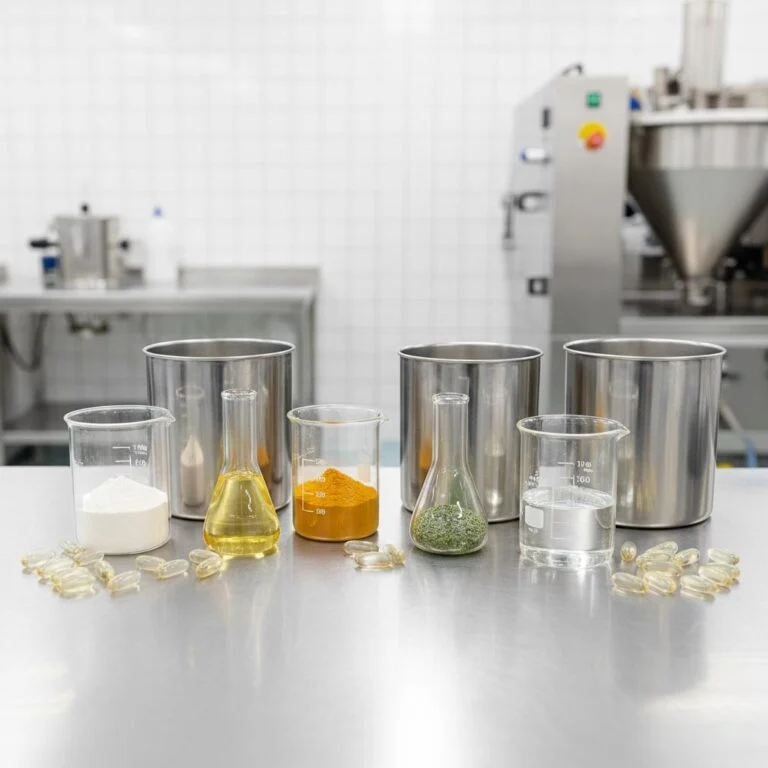
Packaging decisions should follow from the product format and its stability needs, not just aesthetics. A moisture-sensitive powder needs different protection than a shelf-stable capsule. Beyond protection, custom supplement packaging also shapes brand positioning and the customer’s first physical impression of the product, and it needs to hold up through shipping, a packaging choice that looks great on a shelf but arrives damaged after transit creates a real customer-experience problem.
Supplement Label Design
Good supplement label design balances branding with information hierarchy: the product name and key benefit need to be visible at a glance, while required information, Supplement Facts, ingredient declaration, warnings, directions, needs to be legible and properly formatted. Readability matters as much as aesthetics here, since consumers do actually read supplement labels more than many other product categories, and label content should go through a compliance review appropriate to the product and market before printing.
Supplement Label Printing
Supplement label printing involves choices about material (paper, film, foil), adhesive type, finish, and durability, a bottle that sits in a humid bathroom needs a different label material than a dry powder tub. Print quality and packaging compatibility both matter: a label that doesn’t adhere properly to a particular bottle shape or material creates problems that show up after the product has already shipped.
Fulfillment
Integrated supplement fulfillment services connect finished production directly to warehousing, inventory management, order processing, pick-and-pack, and shipping, which is particularly valuable for DTC and eCommerce brands managing orders across Shopify, Amazon, and other marketplaces. Coordinating manufacturing and fulfillment through fewer vendors generally reduces the operational overhead of tracking inventory across multiple systems and handoffs.
Common Mistakes to Avoid When Selecting a Supplement Manufacturer
- Choosing solely based on price.
What goes wrong?
Brands select the lowest quote without evaluating quality systems.
Why it matters?
Cheap production often means weaker documentation, testing, or ingredient sourcing.
What to do instead?
Compare total value, quality, documentation, and reliability, not just per-unit cost.
- Ignoring GMP requirements.
What goes wrong?
Brands don’t confirm the manufacturer operates under applicable dietary supplement cGMP requirements.
Why it matters?
This is a legal baseline, not optional.
What to do instead?
Ask directly and expect a clear answer.
- Not asking about testing.
What goes wrong?
Brands assume testing happens without confirming what’s actually tested.
Why it matters?
Testing gaps can mean quality issues go undetected.
What to do instead?
Ask specifically what raw material and finished-product testing is performed.
- Not reviewing ingredient sourcing.
What goes wrong?
Brands never ask where ingredients come from.
Why it matters?
Sourcing quality directly affects product consistency and safety.
What to do instead?
Ask about supplier qualification and documentation practices.
- Failing to clarify MOQs.
What goes wrong?
Brands discover minimums too late in the process.
Why it matters?
MOQs that don’t match budget or demand create cash-flow strain.
What to do instead?
Confirm MOQs for your specific format and packaging early.
- Ignoring lead times.
What goes wrong?
Brands plan launches around optimistic timelines.
Why it matters?
Missed launch dates disrupt marketing and retail commitments.
What to do instead?
Get realistic lead-time estimates in writing, including for reorders.
- Not asking about scalability.
What goes wrong?
Brands pick a manufacturer suited only to their first small order.
Why it matters?
Growth may require switching manufacturers mid-scale, which is disruptive.
What to do instead?
Ask what capacity looks like at 5x and 10x current volume.
- Choosing a manufacturer without the required dosage format.
What goes wrong?
Brands commit before confirming format capability.
Why it matters?
Switching formats mid-process means starting over.
What to do instead?
Confirm format-specific experience before signing on.
- Failing to understand formulation ownership.
What goes wrong?
Brands don’t clarify who owns the formula IP.
Why it matters?
This affects whether you can move manufacturers later without losing the formula.
What to do instead?
Get formula ownership terms in writing before development begins.
- Not reviewing documentation.
What goes wrong?
Brands never ask to see sample batch records or CoAs.
Why it matters?
Documentation quality reflects overall quality-system maturity.
What to do instead?
Request samples of the documentation you’d actually receive.
- Ignoring packaging capabilities.
What goes wrong?
Brands assume any manufacturer can produce their preferred packaging format.
Why it matters?
Packaging mismatches can mean added vendors and coordination.
What to do instead?
Confirm packaging options match your product vision upfront.
- Not asking about fulfillment.
What goes wrong?
Brands assume production and fulfillment are separate problems.
Why it matters?
Uncoordinated fulfillment adds operational complexity.
What to do instead?
Ask whether fulfillment is offered or needs to be sourced separately.
- Not ordering samples.
What goes wrong?
Brands commit to a full run without testing a prototype.
Why it matters?
Taste, texture, or appearance issues are far cheaper to fix before scale.
What to do instead?
Always request and evaluate samples before full production.
- Failing to clarify communication processes.
What goes wrong?
Brands don’t know who their point of contact is or how updates are shared.
Why it matters?
Poor communication during production causes avoidable delays and confusion.
What to do instead?
Confirm communication cadence and points of contact before starting.
- Not planning inventory properly.
What goes wrong?
Brands order too much or too little relative to actual demand.
Why it matters?
Overstock ties up cash; understock causes stockouts during growth.
What to do instead?
Align order volume with realistic sales forecasts and lead times.
Latest Supplement Manufacturing Trends Shaping the Industry in 2026
A few patterns are visible across the industry heading into 2026, though it’s worth separating what’s an established shift from what’s a reasonable forward-looking expectation.
Established or clearly observable trends:
- Clean-label positioning continues to influence formulation decisions, with brands favoring recognizable ingredients and simpler formulas where the category supports it.
- Functional wellness categories like, sleep, stress, gut health, immune support, remain active areas of new product development across capsule, gummy, and powder formats.
- Beauty-from-within products (collagen, skin-focused nutraceuticals) continue to expand as a category bridging supplements and personal care.
- Sports and performance nutrition remains one of the most active categories for new SKU development, particularly in powder and capsule formats.
- Flavored and convenient formats, gummies, flavored powders, ready-to-drink formats where applicable, continue gaining share relative to traditional unflavored capsules in consumer-facing categories.
- Ingredient transparency and documentation are increasingly expected by retailers and marketplaces, not just consumers, as part of listing and compliance requirements.
- DTC and eCommerce-first supplement brands remain a major go-to-market path, which increases demand for manufacturers who can integrate production with fulfillment.
Reasonable forward-looking expectations, not verified statistics:
- Continued interest in more personalized supplement approaches (though widespread, scalable personalization within contract manufacturing remains limited in practice compared to marketing narratives around it).
- Growing brand interest in sustainable packaging materials, balanced against cost and product-protection requirements.
- Smaller, more frequent production batches as brands test new SKUs faster and manage inventory more cautiously.
- Increasing use of data, sales velocity, reorder rates, customer feedback, to guide product development and formulation adjustments over time.
None of these should be read as guaranteed industry-wide statistics; they reflect general market behavior and reasonable near-term expectations rather than confirmed, sourced figures.
How Supplement Manufacturing Services Help Brands Scale Faster?
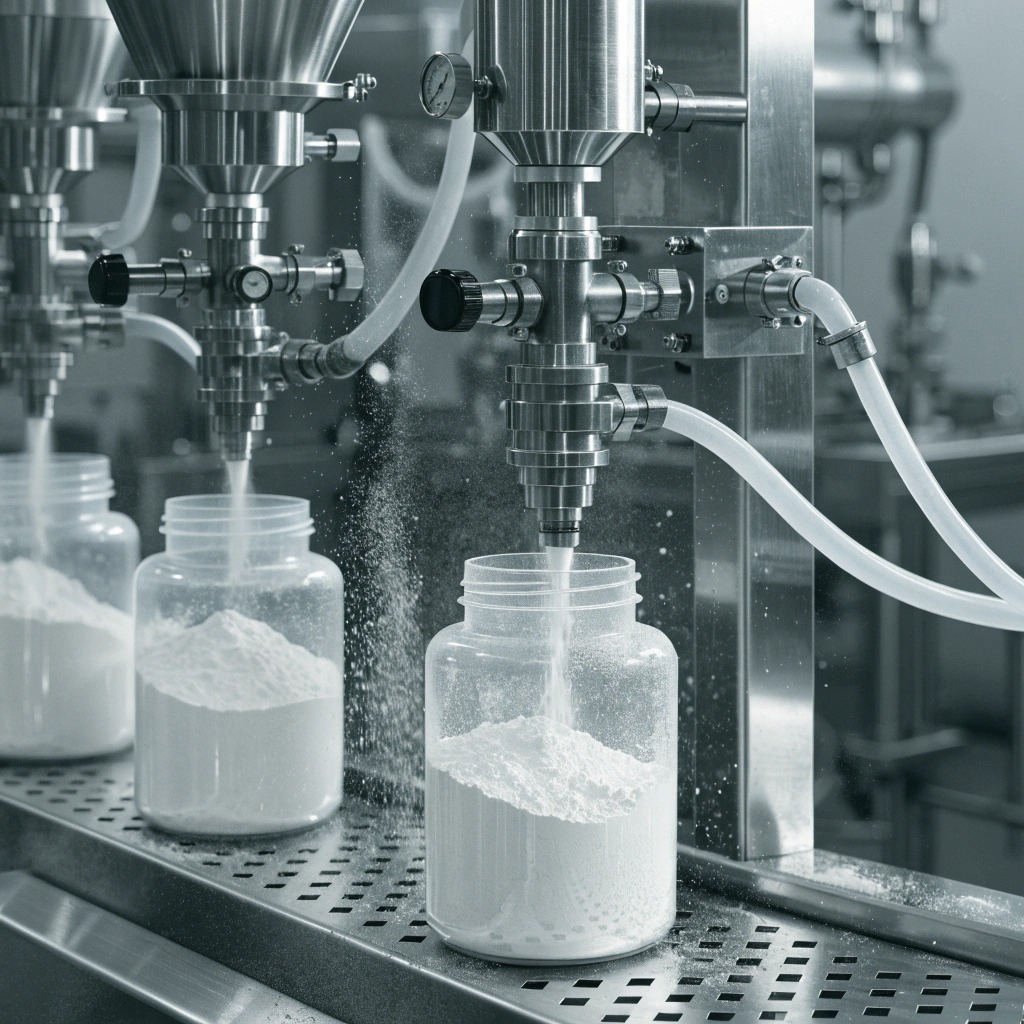
There’s a real difference between launching a supplement and building a scalable supplement business. Launching is a single event: get a formula, get it produced, get it labeled, sell it. Scaling is an ongoing operational challenge: producing consistent quality across dozens of batches, managing inventory across multiple SKUs, expanding into new formats or ingredient categories, and coordinating packaging and fulfillment as order volume grows and becomes less predictable.
A manufacturing partner that operates as a genuine scaling partner, not just a production vendor, typically brings:
- Repeatable processes that hold quality steady whether you’re ordering 1,000 units or 50,000.
- Documented quality systems that make it easier to pass retailer audits or expand into new sales channels.
- Inventory planning support, coordinating production schedules with sales forecasts.
- Multiple dosage formats under one roof, so a brand can expand from capsules into gummies or powders without sourcing a new manufacturer.
- Packaging flexibility as the brand’s SKU count grows.
- Fulfillment integration, so growing order volume doesn’t require adding a new logistics vendor mid-scale.
- Supply-chain coordination that reduces the founder’s day-to-day operational burden as the business grows.
- Support for new SKU development, since expanding a product line is usually faster with an existing manufacturing relationship than starting over with a new partner each time.
A realistic scenario:
A brand launches a single sleep gummy SKU through a private-label formula, sees strong reorder rates, and wants to add a magnesium capsule and a stress-support powder within the year. A manufacturing partner already familiar with the brand’s quality expectations, packaging preferences, and fulfillment setup can bring those new SKUs to market faster than starting the vendor-selection process over for each new product, which is the practical, day-to-day version of what “scaling” actually looks like.
Questions to Ask Before Partnering With a Supplement Manufacturer
Manufacturing
1. Which product formats do you manufacture in-house?
2. What is your current production capacity?
3. Do you subcontract any part of production, and if so, which parts?
Formulation
4. Do you offer custom formulation support, and what does that process look like?
5. Can you work from an existing formula I already have?
6. How do you handle ingredient compatibility issues during development?
Ingredients
7. How do you qualify and vet ingredient suppliers?
8. Can you provide Certificates of Analysis for raw materials?
9. How is ingredient traceability maintained from supplier to finished batch?
Quality Control
10. What in-process quality checks happen during production?
11. Can I see a sample batch record?
12. What are your finished-product release criteria?
Testing
13. What testing is performed in-house versus outsourced to a third-party lab?
14. What ingredient or product types trigger additional testing?
15. How are test failures handled?
Compliance
16. Are you operating under applicable dietary supplement cGMP requirements?
17. How do you support label compliance review?
18. How do you handle regulatory changes that affect ingredients or claims?
Packaging
19. What packaging formats and materials do you offer?
20. Can you accommodate custom packaging designs?
Labeling
21. Do you offer in-house label design and printing?
22. Who is responsible for final label compliance review?
Minimum Order Quantities
23. What are your MOQs for my specific format and packaging?
24. Do MOQs change for reorders versus first orders?
Pricing
25. How is pricing structured, per unit, per batch, or by service?
26. What additional costs should I expect beyond the base production quote?
Lead Times
27. What is a realistic timeline from formula approval to finished product?
28. How do lead times change for reorders?
Fulfillment
29. Do you offer integrated fulfillment, and how does that connect to production?
Scalability
30. What does your process look like if I need to scale from a pilot run to a much larger order?
How Much Does Supplement Manufacturing Cost?
There’s no honest universal price list for supplement manufacturing, because cost depends on too many product-specific variables to quote in general terms. What can be explained clearly is what drives cost up or down:
- Formula complexity — a single-ingredient product costs less to produce than a multi-ingredient blend with several actives.
- Ingredient selection — some raw materials are inherently more expensive due to sourcing, purity standards, or supply availability.
- Dosage and serving size — higher-dose formulas use more raw material per unit.
- Product format — softgel and gummy production generally involve more specialized equipment than capsule filling, which can affect cost.
- Order volume — per-unit cost typically drops as volume increases, but total upfront investment rises.
- MOQs — minimums set a floor on total order cost regardless of per-unit pricing.
- Packaging choices — custom packaging, premium materials, or specialty closures cost more than standard stock packaging.
- Labeling — custom label design and specialty printing (foil, embossing) add cost versus standard printed labels.
- Testing — more extensive testing panels add cost, particularly for third-party lab work.
- Custom formulation — development time and prototyping add cost that a stock formula doesn’t carry.
- Tooling — some packaging or format choices may require tooling investment, particularly for unusual container shapes.
- Fulfillment, shipping, and storage — ongoing costs beyond initial production that affect total cost of doing business with a given partner.
- Product development time — more iteration during formulation adds cost even before a full production run begins.
Because of this many-variable structure, most manufacturers need product-specific information, format, ingredients, dosage, packaging, and volume, before they can provide an accurate quote. Be cautious of any manufacturer offering a firm price before understanding these details; it usually means the quote will change once the real specifications are known.
What Information Should You Prepare Before Contacting a Supplement Manufacturer?
Coming prepared speeds up the quoting and development process considerably. Useful information to have ready includes:
- Product concept — what the product is and what it’s meant to do
- Target audience — who the product is for
- Desired format — capsule, gummy, powder, softgel, or liquid
- Serving size — how much of the product is taken per dose
- Ingredients — specific actives you want included, if known
- Desired dosages — target amounts per ingredient, if known
- Flavor preferences — for gummies, powders, or liquids
- Packaging preference — bottle, pouch, jar, or other format
- Expected order volume — realistic first-order and reorder estimates
- Target launch date — helps the manufacturer assess feasible timelines
- Sales channels — DTC, Amazon, retail, or a mix
- Geographic market — where the product will be sold, since labeling and regulatory requirements can vary
- Budget expectations — a realistic range, even if approximate
- Private-label vs. custom requirements — whether you’re open to a stock formula or need something built from scratch
Frequently Asked Questions
What are supplement manufacturing services?
Supplement manufacturing services cover the production and business support needed to bring a dietary supplement to market — formulation, ingredient sourcing, production, quality control, packaging, labeling, and often fulfillment, typically provided by a contract or private-label manufacturer.
How does supplement manufacturing work?
A product typically moves through concept development, formula development, ingredient sourcing, prototyping, testing, batch production, quality control, packaging, labeling, and fulfillment, with documentation carried through each stage.
What is the difference between private-label and custom supplements?
Private label uses an existing formula the manufacturer already owns, which a brand puts its own label on. Custom manufacturing develops a formula specifically for the brand from ingredient selection onward.
How long does it take to manufacture supplements?
Timelines vary widely depending on formula complexity, ingredient sourcing, and packaging requirements, stock formulas typically move faster than custom formulations, which require prototyping and additional testing.
What is the minimum order quantity for supplements?
MOQs vary by manufacturer, product format, and packaging choice. It’s important to confirm MOQs early in the conversation with a specific manufacturer rather than assuming a standard number across the industry.
Can supplement manufacturers help develop custom formulas?
Yes, most established manufacturers offer custom supplement formulation services, working with a brand on ingredient selection, dosage, flavor, and delivery format.
What types of supplements can manufacturers produce?
Common formats include capsules, gummies, powders, softgels, and liquids, though not every manufacturer produces every format, and not every ingredient is suitable for every format.
What is GMP supplement manufacturing?
GMP refers to Good Manufacturing Practice, in the U.S., dietary supplement manufacturers, packagers, labelers, and holders are required to operate under FDA’s cGMP regulation at 21 CFR Part 111, which covers facility controls, personnel, equipment, production processes, and documentation.
Does every supplement need third-party testing?
Not necessarily. Testing requirements depend on the ingredient, product, market, and applicable regulations. Third-party testing is often used as an added layer of verification and transparency, but the specific testing that’s appropriate should be evaluated case by case.
Can a supplement manufacturer handle packaging and labeling?
Many full-service manufacturers offer packaging selection, label design, and label printing alongside production, which reduces the number of separate vendors a brand needs to coordinate.
Can supplement manufacturers provide fulfillment?
Some manufacturers offer integrated fulfillment services, warehousing, order processing, pick-and-pack, and shipping, connecting production directly to order delivery, which is particularly useful for DTC and eCommerce brands.
How much does supplement manufacturing cost?
Cost depends on formula complexity, ingredients, dosage, format, order volume, packaging, labeling, and testing requirements. Because of this variability, manufacturers generally need product-specific details before providing an accurate quote.
How do I choose a supplement manufacturer?
Evaluate manufacturing capabilities, GMP compliance, quality-control systems, testing capabilities, ingredient sourcing practices, MOQs, lead times, packaging and labeling support, fulfillment options, communication, and documentation transparency, not price alone.
What should I ask a supplement manufacturer before signing a contract?
Ask about formulation ownership, testing practices, documentation availability, realistic lead times, MOQs, scalability, and communication processes, in addition to standard production and pricing questions.
Can startups work with supplement manufacturers?
Yes. Many manufacturers work with first-time brand owners, often starting with a stock formula or lower MOQ to help a new brand launch and validate demand before investing in custom development or higher production volumes.
Conclusion
Manufacturing is not a back-office detail in a supplement business, it’s the foundation everything else is built on. A great marketing plan can’t compensate for inconsistent batches, a labeling error, or a manufacturer that can’t scale when demand shows up. The brands that build durable businesses in this category are usually the ones that treat their choice of manufacturing partner as a strategic decision, not a line-item to minimize.
The path from concept to shelf runs through formulation, ingredient sourcing, testing, production, quality control, packaging, labeling, and fulfillment, and quality, transparency, and scalability matter at every one of those stages, not just at the finish line. Whether a brand is validating its first product with a stock formula or investing in a fully custom formulation, the underlying questions are the same: is the manufacturer operating under applicable GMP requirements, can they document what they’re doing, and can they grow with the business rather than just fill a first order.
The Pure Nutra Labs works with supplement brands across capsules, gummies, powders, softgels, and liquids, supporting formulation, production, packaging, labeling, and fulfillment as an FDA-registered, cGMP-compliant, U.S.-based supplement manufacturer. If you’re evaluating manufacturing partners for a new product or an existing brand looking to switch, request a quote to talk through your specific format, timeline, and volume needs.